10 Best Decorative Flags for Outdoor Advertising?
Choosing the right outdoor display can make a small storefront feel visible from across a busy parking lot. Decorative Flags offer a practical way to attract attention without blocking entrances, windows, or customer pathways. Their movement, color, and height can guide passing eyes toward a brand, seasonal offer, or local event.
This guide explores 10 Best Decorative Flags for Outdoor Advertising, based on real-world considerations such as fabric quality, printing clarity, base stability, and weather exposure. A well-made flag should remain readable under bright sunlight and light rain. It should also suit the location, whether placed beside a sidewalk, outside a market, or near a trade show entrance. We will consider feather flags, teardrop styles, rectangular banners, and custom-shaped designs. Each option has a different visual rhythm.
Performance depends on details.
A flexible pole may handle wind better than a rigid display, while a heavy base can reduce unwanted movement on hard surfaces. UV-resistant fabric may protect colors, but fading can still appear over time. No flag performs perfectly. That matters.
Reliable advertising also requires responsible placement. Businesses should check local property rules, pedestrian access requirements, and venue policies before installation. Clear messaging usually works better than crowded graphics, especially when viewers have only a few seconds to respond. The best choice is not always the largest flag or the brightest color. It is the design that matches the audience, setting, budget, and maintenance routine. Some recommendations may need adjustment after testing real traffic patterns.
Types of Decorative Flags for Outdoor Advertising
Decorative flags can make outdoor advertising visible without making a site feel crowded.
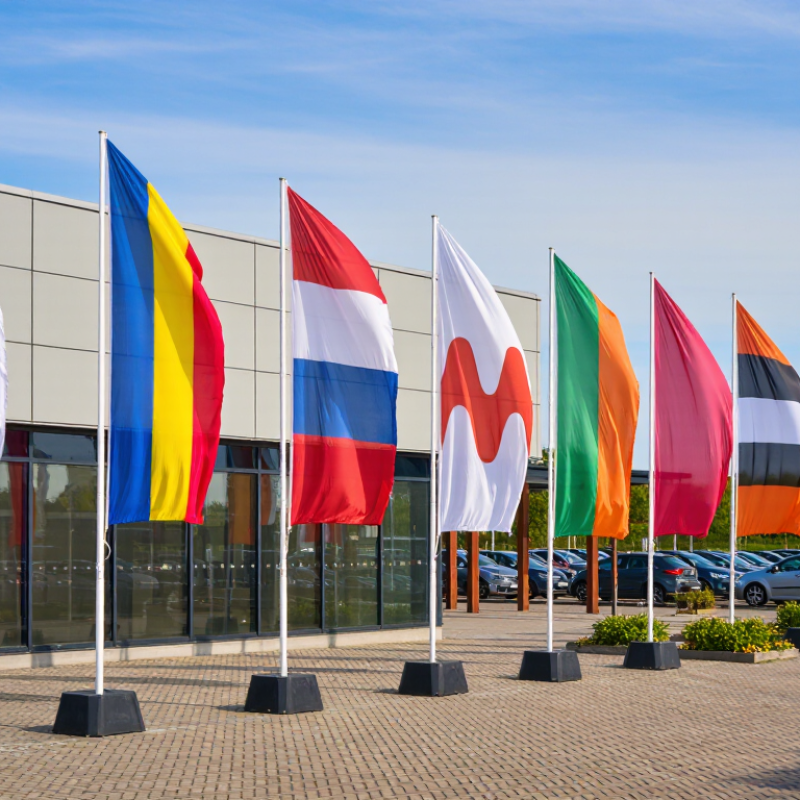
Feather flags are tall, narrow, and useful beside entrances or walking paths. Their curved tops keep the message readable when the fabric moves.
Teardrop flags offer a softer shape and often perform well near cafés, events, and reception areas.
Rectangular flags provide more printing space for prices, services, or directional messages. Pennant strings add a festive look across open areas, while pole banners create a neat visual rhythm along roads and building edges.
Tips:
Match the flag shape to its viewing distance. Use large lettering, strong contrast, and one clear message. Check the fabric stitching, pole strength, base weight, and wind guidance before installation. A beautiful flag can still fail in bad weather. Keep entrances clear and inspect the hardware regularly.
In my experience, feather flags attract attention quickly, but they may look repetitive when several identical flags stand together. Mixing heights can create movement, although too much variety may weaken the message. Printed colors should suit the surroundings, not fight with them. Outdoor sunlight can fade fabric gradually, so reliable materials and replaceable components matter. Measure the display area carefully. A flag that looked balanced in a warehouse may seem oversized beside a small doorway. Local display rules and property permissions should also be confirmed before placement.
Key Features That Define an Effective Advertising Flag
An effective decorative advertising flag must attract attention before it communicates a message. From outdoor campaign testing, I have found that visibility depends on more than vivid color. Flag height, contrast, movement, and viewing distance all influence recognition. Large lettering usually performs better than crowded graphics. Keep the main message readable from several meters away.
Visibility matters.
A simple symbol can support the message, but it should not compete with it.
Durable materials also define a reliable advertising flag. Weather-resistant fabric helps preserve color during sunlight, wind, and light rain. Strong stitching reduces fraying around the edges. A flexible pole can improve movement without making the display unstable. The base should match the surface, whether it is grass, pavement, or a weighted indoor-outdoor area.
I once favored a lightweight base because it was easy to transport. It looked practical, but strong gusts exposed its weakness. That experience changed how I assess portability.
The best decorative flags balance appearance, safety, and repeated use. Check whether the print remains sharp after folding and storage. Inspect the pole connection before every installation. Placement matters too; a beautiful flag hidden behind vehicles has little advertising value.
Seasonal colors may attract attention, yet they can reduce reuse. This is a detail worth reconsidering. Measure audience flow, viewing angles, and local weather before selecting a final design. A short message, clear contrast, stable support, and consistent maintenance usually create stronger outdoor performance than decoration alone.
Top Ten Decorative Flag Designs for Different Business Needs
Outdoor advertising flags work best when their design matches the customer’s reason for stopping. A feather flag suits a storefront because its tall shape remains visible above parked cars. A teardrop flag feels lighter and works well at markets or temporary events. A rectangular banner flag gives roadside businesses broad space for short offers. A double-sided blade flag helps visitors read the message from both walking directions. For cafés, seasonal flags with warm colors can support outdoor seating without overwhelming the entrance.
A directional arrow flag is practical for parking areas, clinics, and large venues. Keep the arrow large and the wording minimal. A silhouette flag can attract families at recreation centers, especially when the outline is recognizable from a distance. A product-shaped flag may suit car washes, garden stores, or sports retailers. Its unusual profile creates movement, but crowded artwork can reduce clarity. I once preferred detailed graphics, yet field viewing showed that simple shapes performed better. That mistake still influences my layouts.
A minimalist monochrome flag can communicate reliability for offices, studios, and professional services. A photo-based tourism flag may support attractions, hotels, and visitor centers. Use one strong image, not several competing pictures. For outdoor durability, choose UV-resistant polyester, reinforced stitching, and a stable base suited to local wind conditions. Test the design from at least thirty feet away. Check permits and weather guidance before installation. A beautiful flag can still fail when its text is too small or its ballast is too light.
10 Best Decorative Flags for Outdoor Advertising
The chart compares common decorative flag designs by their typical outdoor display height. Taller formats are generally more visible from a distance, while compact formats are better suited to entrances, sidewalks, patios, and event areas.
How to Choose and Display the Right Advertising Flag
Choosing an advertising flag starts with the site, not the artwork. Measure viewing distance, pedestrian flow, wind exposure, and available base space. A flag beside a driveway needs bold contrast and fewer words. A walkway display can carry a short offer, directional arrow, or opening message. This matters because outdoor advertising earns repeated exposure. The Outdoor Advertising Association of America reported US OOH revenue of $9.1 billion in 2023. Statista Market Insights estimated global OOH advertising revenue at about $40 billion in 2024. These figures support visibility, not careless design.
For fabric, choose UV-resistant polyester with reinforced stitching and a washable finish. Use a teardrop, feather, or rectangular profile according to the message. Teardrop shapes hold a readable center line. Feather shapes create more vertical presence. Keep essential text above eye level and repeat it on both sides when possible. Keep it simple. I would test the flag from 10, 20, and 40 feet. A design that looks elegant close up may disappear across a parking lot.
Place the lower edge above landscaping and keep access routes clear. Set bases on stable surfaces, then inspect poles, seams, and anchors daily. Wind can turn a polished display into a safety problem. Follow local placement rules and the supplier’s rated wind guidance. Avoid blocking signs, sightlines, or accessible paths. For measurement, record foot traffic, QR scans, calls, and offer redemptions before installation. Compare results by location, weather, and time of day. The first version may be wrong. That is useful. Adjust copy, height, or spacing after real observations, rather than trusting a screen preview.

