What Is Fast Drying Epoxy Resin and How Does It Work?
Fast Drying Epoxy Resin is often chosen when a repair, coating, or craft project needs a firm surface quickly. However, “drying” is not technically precise. Epoxy does not simply lose water like paint; it cures through a chemical reaction between resin and hardener. That reaction forms a strong, cross-linked plastic material.
The process begins when two measured components are mixed. The hardener activates the resin molecules, creating heat as curing progresses. A thin layer may become touch-dry within minutes, while full strength can require many hours or several days. Temperature, humidity, layer thickness, and mixing accuracy all influence the result. Warm conditions usually accelerate curing, but excessive heat can shorten working time dramatically. It may also create bubbles, discoloration, or uneven surfaces.
Small details matter.
In practical use, manufacturers’ technical data should guide every decision. Check the recommended mixing ratio, pot life, curing schedule, and suitable surfaces before application. A clean, dry substrate improves adhesion, while inaccurate measurements can leave the resin soft or sticky. Gloves, eye protection, and adequate ventilation remain sensible precautions, even during small projects. These steps reflect common workshop experience, not merely laboratory theory.
The phrase Fast Drying Epoxy Resin can therefore describe convenience, but it should not promise instant performance. A resin that feels hard may still lack complete chemical resistance or structural strength. This distinction is easy to overlook. Understanding how the material reacts helps users select the right formulation and avoid rushed expectations. Product claims also deserve careful comparison, because “fast” can mean different things across brands, temperatures, and applications.
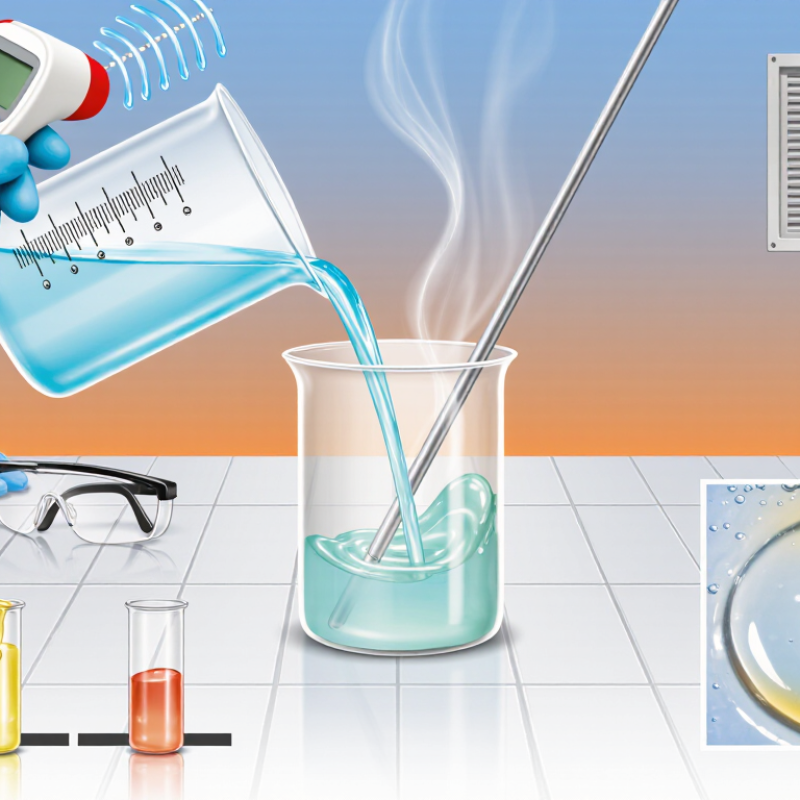
Fast-Drying Epoxy Resin: Definition and Typical 5–60-Minute Set Times
Fast-drying epoxy resin is a two-part adhesive made from resin and hardener.
After mixing, a chemical reaction creates heat and changes the liquid into solid plastic. Its key feature is a short working window, often followed by a 5–60-minute set time.
Set does not mean fully cured.
In practical use, a five-minute formula may become firm within five minutes, but it can remain weaker underneath. A 30- or 60-minute formula usually gives more time to align parts and remove air bubbles.
Room temperature, layer thickness, mixing accuracy, and humidity can change the result. I check the surface before handling it, rather than trusting the stated time alone.
That small habit prevents many avoidable repairs.
Measure both components carefully and mix slowly until the color and texture look uniform. Scrape the cup sides and bottom; unmixed material may stay soft or sticky.
Use a timer, gloves, eye protection, and ventilation suitable for the product instructions.
I once underestimated heat in a thick pour. The center hardened faster than expected.
This is where the definition feels incomplete: “fast” describes setting, not every stage of performance.
For load-bearing repairs, allow the full recommended cure period before testing the bond.
Reactive Components: Epoxy Groups, Amine Hardeners, and 1:1–2:1 Mix Ratios
Fast drying epoxy resin is a two-part adhesive that cures through a chemical reaction, not simple evaporation. One part contains epoxy groups, while the other contains amine hardeners. When combined, amine molecules open the epoxy rings and create strong, cross-linked bonds. The resin gradually changes from a liquid into a solid network.
Mix ratio matters more than many users expect. A product labeled 1:1 requires equal volumes of resin and hardener. A 2:1 system needs two parts resin and one part hardener. These ratios are not interchangeable. Even a small measuring error can leave a surface soft, sticky, or brittle. Use marked cups or a digital scale when the instructions allow weight-based measurement. Stir slowly, scraping the sides and bottom. Fast mixing can trap bubbles and raise the temperature.
Fast curing does not mean instant strength. Warm conditions usually speed the reaction, while cold conditions slow it. A thin coating may feel dry within minutes, yet deeper layers can remain chemically active for hours. I have seen clean-looking surfaces fail after careless proportioning. That mistake is easy to repeat. Cure time also depends on layer thickness, humidity, and the material beneath the resin. Always test a small area first, especially on porous wood or heat-sensitive surfaces. A slight mix imbalance may seem harmless, but epoxy chemistry is less forgiving than it looks.
Curing Mechanism: Exothermic Cross-Linking from Liquid to Solid
What Is Fast Drying Epoxy Resin and How Does It Work?
Fast drying epoxy resin does not dry by losing water or solvent. It cures through a chemical reaction between resin molecules and a hardener, often an amine-based compound. The liquid begins as separate, mobile components. Once mixed in the correct ratio, their reactive groups connect and create a three-dimensional polymer network.
This reaction releases heat, known as exothermic cross-linking. Heat matters. A warmer mixture usually cures faster, while a cold workspace can extend its working time. In a mixing cup, the temperature may rise quickly because the resin is concentrated. A thin layer releases heat more effectively and often cures more evenly. A thick pour can trap heat, produce bubbles, or harden unevenly. I have seen a surface feel solid while the lower section remained soft, which is an easy mistake to overlook.
Fast curing does not mean instant strength. The resin may become touch-dry within minutes, but deeper cross-linking can continue for hours or days. Accurate measuring, slow mixing, and careful scraping of the container walls improve reliability. Excess hardener will not safely create a stronger result; it can leave a sticky surface or weaken the cured material. Temperature, humidity, layer thickness, and the chosen formulation all affect performance. The process is predictable, but not perfectly forgiving.
What Is Fast Drying Epoxy Resin and How Does It Work? - Curing Mechanism: Exothermic Cross-Linking from Liquid to Solid
| Curing Stage | What Happens Chemically | Typical Physical State | Approx. Temperature Trend | Practical Indicator |
| 1. Mixing | The epoxy resin and amine-based hardener are combined. Reactive epoxy groups begin reacting with hydrogen-containing groups in the curing agent. | Low-viscosity to medium-viscosity liquid | Usually close to room temperature, approximately 18–25 °C | Uniform color and consistency after thorough mixing |
| 2. Induction Period | Initial molecular reactions occur while the material remains workable. The growing molecules are still relatively small and mobile. | Liquid; viscosity gradually increases | Temperature begins to rise slowly as reaction heat is generated | The mixed material can still be spread, poured, or positioned |
| 3. Gelation | Individual molecules connect into a three-dimensional network. The system reaches the gel point and loses most of its ability to flow. | Gel or soft solid | Often warmer than the surroundings; the rate depends strongly on mix volume and ambient temperature | Surface becomes tacky or firm, and the resin no longer levels easily |
| 4. Exothermic Acceleration | Epoxy–hardener reactions release heat. The heat can accelerate the reaction, especially in thicker or larger batches. | Rapidly stiffening mass | The internal temperature may rise substantially above room temperature; large masses can become very hot | Shorter working time and noticeable warming of the container or casting |
| 5. Initial Cure | A continuous cross-linked polymer network has formed, giving the resin useful handling strength. | Hard or firm solid | The material begins cooling after the main reaction peak | Light handling may be possible, but full mechanical and chemical properties may not yet be developed |
| 6. Post-Cure | Remaining reactive groups continue to react. Cross-link density and final performance increase over time and may be improved by controlled heating when recommended by the formulation. | Fully cured thermoset solid | Stable at ambient temperature after the main reaction; optional post-curing may use elevated temperatures | Maximum practical hardness, chemical resistance, dimensional stability, and strength are approached |
Typical Performance and Processing Factors
| Data Dimension | Typical Range or Condition | Effect on Fast-Curing Epoxy |
| Working time at 20–25 °C | Approximately 3–30 minutes for many fast-setting formulations | Defines the available time for mixing, spreading, alignment, and cleanup |
| Initial handling time | Often approximately 5 minutes to several hours, depending on formulation and thickness | A part may be moved carefully before the resin reaches full cure strength |
| Full cure development | Commonly 24–72 hours at room temperature; some systems require longer | Final strength and chemical resistance develop after the surface feels hard |
| Ambient temperature | Warmer conditions generally accelerate curing; cooler conditions slow it | Temperature changes affect viscosity, working time, gel time, and final cure rate |
| Mix ratio | Must follow the specified resin-to-hardener ratio by volume or weight | Incorrect ratios can leave unreacted material, reduce strength, and cause persistent tackiness |
| Mixed batch size | Small, shallow batches dissipate heat more effectively than large, deep batches | Large volumes may cure faster, reach higher internal temperatures, and develop bubbles or distortion |
| Layer thickness | Thin adhesive films generally control heat better than thick castings | Thicker sections increase heat retention and exothermic peak risk |
| Moisture and surface condition | Dry, clean, lightly abraded surfaces are generally preferred; moisture can interfere with adhesion or appearance | Contamination may cause poor wetting, weak bonding, cloudiness, blush, or localized uncured areas |
Note: The ranges above are general engineering values for fast-curing epoxy systems. Actual working time, handling time, temperature rise, and full-cure time vary with formulation, mix ratio, batch size, layer thickness, substrate, and environmental conditions.
Performance Testing: Gel Time by ASTM D2471 and Tensile Strength by ASTM D638
Fast drying epoxy resin cures through a chemical reaction between resin and hardener. Heat develops as the mixture changes from liquid to a rubbery gel. Gel time shows when flow becomes limited, not when the resin reaches full strength.
ASTM D2471 helps measure gel time under controlled conditions. Place a prepared sample in a suitable container, monitor temperature, and record the point where movement stops. Room temperature, mixing speed, sample mass, and container shape can change the result. Small errors matter. A practical test should use repeated samples, because one reading may be misleading. The peak exotherm also deserves attention, especially with larger batches.
Tips: Keep tools dry and clean. Record resin temperature before mixing. Start timing immediately. Compare samples from the same batch.
After curing, ASTM D638 evaluates tensile strength using shaped plastic specimens. The test machine pulls each specimen at a specified speed until it breaks. Record tensile strength, elongation, and the failure location. A clean break in the gauge section usually supports a valid result. Breaks near the grip may indicate poor alignment or preparation. Fast gel time does not guarantee high tensile strength. I have seen quick-setting samples remain brittle when tested too early. Cure time, post-curing temperature, specimen thickness, and humidity can influence the outcome. Testing only one specimen is weak evidence. Use several specimens and report the average with individual results. That makes the performance easier to judge.
Cure Control: Temperature, Layer Thickness, and 20–25°C Processing Conditions
What Is Fast Drying Epoxy Resin and How Does It Work?
Fast drying epoxy resin does not simply “dry.” It cures through a chemical reaction between resin and hardener. This reaction creates a solid, cross-linked material. Temperature, layer thickness, and mixing accuracy control the result more than speed alone.
At 20–25°C, many fast systems offer predictable working time and steady curing. Heat changes everything. Warmer conditions usually shorten pot life, while cooler conditions slow the reaction and may leave the surface tacky. Keep both components near room temperature before mixing. Use a clean cup, weigh accurately, and scrape the sides carefully. Small ratio errors can remain soft for hours.
Thin layers cure faster.
Thick pours behave differently. As epoxy reacts, it releases heat. A deep pour can trap that heat, accelerate suddenly, and develop bubbles, cracks, or yellowing. Apply several controlled layers when the manufacturer’s technical data allows it. Check the center temperature with a suitable thermometer, not only the surface. A room may read 22°C while a large pour becomes much hotter internally. That difference is easy to miss.
One practical mistake is judging cure by touch alone. The surface may feel firm while the lower section remains flexible. Allow extra time when humidity, poor ventilation, or an uneven substrate affects conditions. Cure schedules are useful, but they are not promises. Small test batches often reveal problems before valuable work is committed.
Fast-Drying Epoxy Resin: Cure Control at 20–25°C
The chart uses a normalized planning model based on two established curing effects: epoxy reaction rates generally increase as temperature rises, while thicker layers retain more reaction heat and require tighter cure control. Values are comparative indicators rather than a product specification.
At 20–25°C, warmer conditions usually shorten working and cure times. Increasing the layer from 3 mm to 10 mm increases heat-retention tendency by approximately 3.3 times when thickness is used as a simple normalized indicator, so deep pours should be made in controlled layers and monitored for exotherm.

