How to Find Better Doors and Windows from China?
Finding better doors and windows from China requires more than comparing online prices. The right supplier must balance thermal performance, durability, design, compliance, and reliable delivery. China remains a major manufacturing base, supported by extensive glass, aluminum, hardware, and fabrication supply chains. UN Comtrade data shows China is among the world’s leading exporters of glass and aluminum products, although trade categories do not always separate complete window systems clearly. That limitation matters.
Market data also shows why product selection deserves careful attention. The International Energy Agency reports that buildings account for about 30% of global final energy consumption. Poorly sealed windows can increase heating and cooling demand, even when the frame looks attractive. A low price is not a performance certificate.
A practical sourcing process should examine U-values, solar heat gain, air leakage, water resistance, wind-load testing, and hardware quality. Look for documented testing, not only showroom photographs. ISO 9001 certification can support process control, but it does not guarantee every finished product. Suppliers should provide drawings, material specifications, sample approvals, factory inspection records, and clear packaging details. The American Architectural Manufacturers Association and European standards offer useful technical references, depending on the destination market. Local building codes still control the final decision.
Experience exposes uncomfortable details. A beautiful sample may hide weak corner joints or thin reinforcement. A factory may communicate well, yet struggle with customized orders. No sourcing guide is flawless. Buyers should test assumptions through small trial orders, independent inspections, and written quality standards. This guide explains how to compare factories, verify performance, control risks, and choose better doors and windows from China with greater confidence.
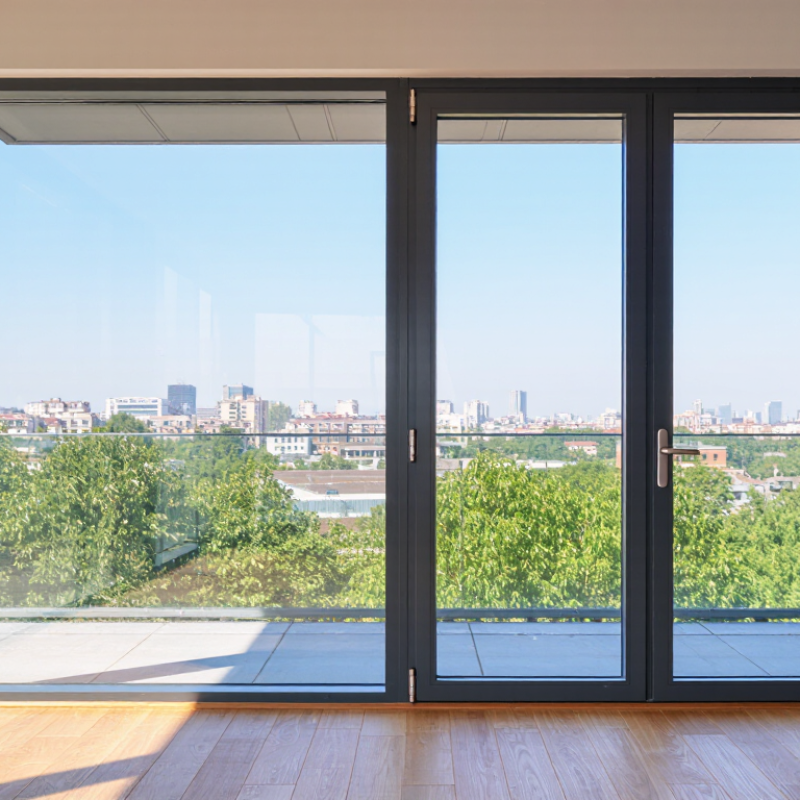
Define Your Requirements for Chinese Doors and Windows
How to Find Better Doors and Windows from China?
Define Your Requirements for Chinese Doors and Windows
Finding better doors and windows from China begins with a precise requirement sheet. Record the wall opening, frame depth, glass type, color, and opening direction. Include exact measurements in millimeters. “Large window” is not a useful specification.
Your climate also matters. Coastal projects may need corrosion-resistant hardware and sealed frames. Cold regions require suitable insulation and low-emissivity glazing. Hot areas may need solar-control glass and external shading.
Consider noise, wind exposure, rain, and cleaning access. A beautiful folding door can become inconvenient when its panels are too heavy. Measure twice.
Describe the performance you expect, not only the appearance. Ask about air leakage, water resistance, wind-load testing, thermal performance, and safety glass. Request drawings, material details, inspection records, and installation instructions. The documents should match the actual product, not a generic sample.
Check aluminum thickness, gasket material, drainage holes, locking points, and screen quality. Small details cause large problems.
Samples deserve careful attention. Test the handle, rollers, hinges, and locking action repeatedly.
Compare the sample with the final quotation line by line. Confirm packaging, delivery terms, replacement parts, and acceptable color variation. A useful requirement sheet also states what happens when dimensions change. Some decisions may still be imperfect. Real buildings move, measurements vary, and one sample cannot represent every production batch. Clear communication reduces those surprises.
Research China’s Door and Window Manufacturing Market
How to Find Better Doors and Windows from China?
China’s door and window manufacturing market is broad, specialized, and uneven. A serious buyer should study manufacturing clusters, material choices, and export experience before requesting quotations. Aluminum systems, uPVC profiles, timber frames, and steel doors serve different climates and budgets. Coastal projects may need stronger corrosion resistance. Cold regions require better thermal breaks and sealed glass.
A useful market review begins with factory evidence, not attractive catalogs. Check production lines, testing equipment, quality procedures, and worker training. Ask for recent project records with similar sizes and performance requirements. Confirm glass thickness, hardware specifications, drainage design, and surface treatment in writing. Request independent test reports when energy efficiency, wind resistance, or fire performance matters. A factory may offer a low price while excluding packaging, installation guidance, or replacement parts.
I have found that factory audits often reveal practical details. Look closely at corner joints, sealant storage, warehouse moisture, and finished-unit protection. Small defects become expensive after installation. Sample testing is valuable, but one perfect sample does not prove stable mass production. That remains a weakness in many sourcing decisions. Review several batches and compare measurements carefully. Also examine communication speed, drawing accuracy, lead-time records, and the supplier’s response to a rejected unit. Reliable cooperation is shown during problems, not only during sales discussions.
Evaluate Suppliers, Materials, Certifications, and Product Quality
How to Find Better Doors and Windows from China?
Evaluate Suppliers, Materials, Certifications, and Product Quality
Finding better doors and windows from China starts with supplier evidence, not polished photos. Request legal company details, production capacity, references, and recent project records. A video call can reveal storage conditions, glazing lines, and quality-control routines. Ask who checks dimensions before packing. Vague answers are a warning.
Compare profiles, glass, seals, hardware, and surface finishes carefully. Request sample cross-sections, wall-thickness data, glass configurations, and thermal performance figures. Certifications should match your destination market and product type. Verify report dates, model numbers, testing standards, and laboratory credentials. A management certificate does not prove product performance. Certification alone cannot guarantee every shipment. Samples may also perform better than mass production.
Use measurable checks for air leakage, water resistance, wind load, operation cycles, and corner strength. Inspect packaging for edge protection, labels, and moisture control. Confirm installation drawings, replacement parts, warranty exclusions, and lead times. One overlooked detail can damage excellent manufacturing: inaccurate site measurements. Leave suitable expansion space for local temperature changes. Record defects and corrective actions during inspection. A pilot order is safer before large-volume purchasing. Perfect sourcing is unrealistic. Traceability still needs improvement.
Compare Quotations, Customization Options, and Minimum Orders
How to Find Better Doors and Windows from China?
A reliable comparison starts with complete quotations, not the lowest number. Ask each supplier to list frame material, glass layers, hardware, coating, packaging, and delivery terms. A quote for a 2.4-meter sliding door may exclude screens, reinforced packaging, or installation accessories. Those missing details can change the final cost significantly.
Customization also needs clear limits. Request technical drawings, section profiles, color samples, opening directions, drainage details, and glass performance data. Confirm whether unusual sizes require new tooling. Check production tolerances and inspection procedures before paying a deposit. In practical sourcing work, written specifications prevent more disputes than friendly conversations. Still, no document removes every risk. I have seen attractive samples hide weak corner joints. That mistake is expensive.
Tips: Compare at least three itemized quotations. Use the same specification sheet for every supplier. Ask for photos of completed projects and recent quality records. Confirm minimum order quantities for each design, color, and size, not only for the total shipment. A supplier may accept ten units overall but require twenty units for one custom finish. Ask about replacement parts, lead times, and pre-shipment inspection. Keep communication in writing. Short messages create gaps. A small gap can become a large charge.
| Supplier Profile | Typical Product Range | Indicative Factory Quotation* | Customization Options | Typical MOQ | Estimated Production Lead Time | Common Technical Documents | Best Fit For |
|---|---|---|---|---|---|---|---|
| Standard uPVC Window Supplier | Single- and double-glazed uPVC windows, fixed windows, casement windows, tilt-and-turn windows | Approximately US$45–150 per m² | Frame color Glass thickness Hardware finish Opening direction | Usually 20–50 units or one mixed-container order | About 20–35 days after approved drawings and deposit | Product drawings, packing list, commercial invoice, basic test reports when available | Residential projects, apartments, renovations, and price-sensitive developments |
| Thermal-Break Aluminum Window Supplier | Thermal-break casement windows, sliding windows, lift-and-slide systems, double- and triple-glazed units | Approximately US$120–350 per m² | Profile depth Powder coating Glass specification Hardware system Drainage design | Often 30–100 m² per configuration | About 30–50 days, depending on tooling, glass, and hardware availability | Section drawings, thermal-performance data, glass specification, installation guidance | Energy-efficient homes, hotels, offices, and projects with stronger weather-performance requirements |
| Aluminum Sliding Door Supplier | Standard sliding doors, multi-panel sliding doors, lift-and-slide doors, patio doors | Approximately US$150–450 per m² | Panel size Track configuration Glass type Screen door Locking system | Typically 10–30 sets for standard designs; higher for special systems | About 25–45 days after final shop drawings | Shop drawings, hardware schedule, glass details, loading and installation instructions | Balconies, villas, resort projects, and large openings requiring indoor-outdoor access |
| Aluminum Entrance Door Supplier | Single entrance doors, double doors, pivot doors, fire-rated or security-oriented door systems | Approximately US$180–700 per door set | Door leaf size Surface finish Glazing Handle and lock Threshold | Usually 5–20 sets for standard models; custom projects may require more | About 30–60 days, especially for custom hardware or oversized doors | Door schedule, elevation drawings, hardware list, finish samples, installation notes | Residential entrances, commercial buildings, villas, and boutique hospitality projects |
| Wood or Aluminum-Clad Window Supplier | Wood windows, aluminum-clad wood windows, heritage-style windows, custom-shaped units | Approximately US$280–900 per m² | Wood species Interior stain Exterior cladding Muntins Custom shapes | Often 10–30 units, subject to design complexity | About 45–90 days after sample approval | Material specifications, finish samples, shop drawings, glazing details, care instructions | Premium residences, heritage renovations, luxury hotels, and architect-designed projects |
| Fire-Rated or Specialized Door Supplier | Fire-rated steel doors, fire-rated glazed doors, acoustic doors, emergency-exit doors | Approximately US$180–850 per door set | Fire rating Acoustic rating Vision panel Closer and hinges Panic hardware | Commonly 10–50 sets, depending on certification and configuration | About 35–70 days after technical approval | Fire-test reports, acoustic data where applicable, hardware schedule, door schedule, installation instructions | Hotels, schools, hospitals, warehouses, offices, and code-controlled projects |
| Note: The quotation ranges are indicative market benchmarks for commonly ordered products and are not fixed offers from any named company. Actual prices depend on dimensions, quantity, glazing, profile alloy, surface treatment, hardware, packaging, export terms, destination, and applicable taxes. Always request a line-item quotation, approved shop drawings, material samples, test documents, and a pre-production sample before placing a large order. | |||||||
Verify Samples, Contracts, Inspections, and International Shipping
How to Find Better Doors and Windows from China?
A reliable purchase starts with a carefully verified sample. Request the exact profile, glass thickness, hardware, finish, and dimensions. Compare the sample with your drawings, not only with product photos. Check corner joints, drainage holes, seals, locking points, and surface consistency. Ask for test results when thermal or acoustic performance matters. Small differences become expensive across a full container.
Do not accept vague contracts. Specify materials, tolerances, colors, packaging, production dates, payment stages, and remedies for defects. Attach approved drawings and sample photographs to the agreement. I have found that “same as sample” is too weak. It leaves room for interpretation. A clear inspection standard works better. Use an independent inspection before the final payment. Inspect random cartons, not just the best-looking units. Record measurements, photos, and serial references. Even experienced buyers can miss a reversed opening direction.
International shipping needs equal attention. Confirm carton strength, pallet treatment, moisture protection, and container loading plans. Check the agreed Incoterm, export documents, customs information, and insurance responsibilities. Ask for a packing list showing each window or door clearly. Measure the packed volume yourself. Freight estimates are sometimes optimistic. This step may feel repetitive, but damaged frames and missing hardware create serious delays at the destination. Keep written approval for every change. Silence is not approval.
How to Find Better Doors and Windows from China?
Verify samples, contracts, inspections, and international shipping before placing a large order. The chart compares the approximate internal volume of common dry containers, helping buyers select suitable shipping capacity for packaged doors and windows.
Approximate nominal internal volumes: 20-foot standard containers hold about 33.2 m³, 40-foot standard containers about 67.7 m³, and 40-foot high-cube containers about 76.4 m³. Actual usable capacity depends on packaging, pallets, loading protection, and the final door or window dimensions. Confirm the approved sample and packing requirements before booking shipping.
Related Posts
-
2026 Best Euro Doors and Windows for Your Home?
-

10 Essential Tips for Choosing Euro Doors and Windows for Your Home?
-
The Best Ways to Ensure Safe Windows for Your Home and Office?
-

Best Front Doors and Windows for Home Buyers in 2026?
-

The Evolution of Front Windows: How Modern Designs Enhance Energy Efficiency and Style
-
What is Florida Windows and How Do They Benefit Your Home?