

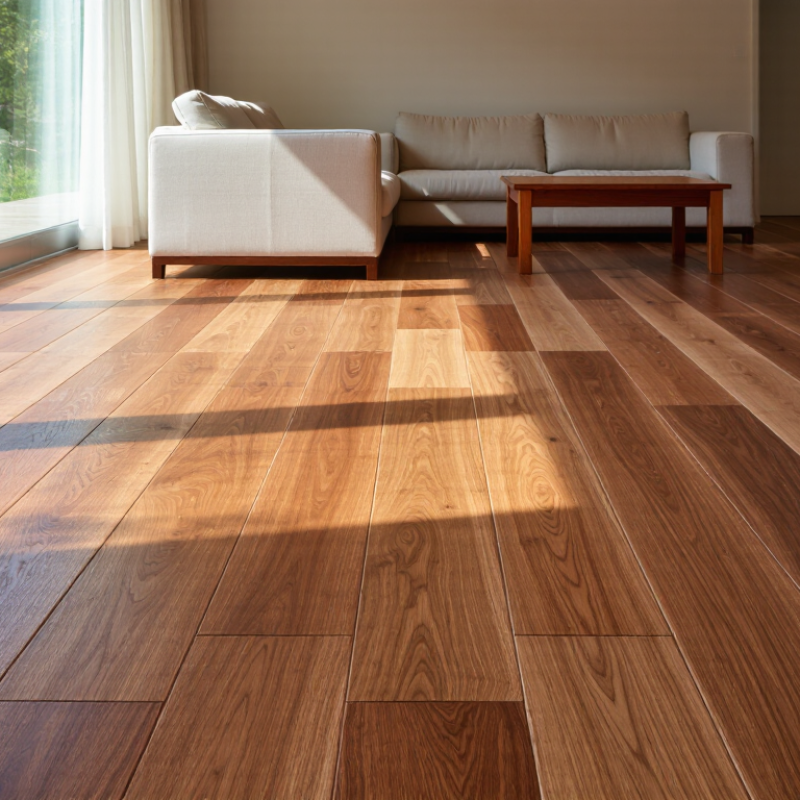
How to Choose the Best Hard Wood Flooring?
Janka hardness ratings show how much force is needed to press a steel ball into wood. A higher number usually means better resistance to dents.
White oak measures about 1,360 lbf hard maple reaches roughly 1,450 lbf Hickory is harder, near 1,820 lbf Walnut is softer, around 1,010 lbf
but it offers a warmer appearance and may suit quieter rooms.
Room use should guide the decision. Hallways and living rooms often face grit, shoes, and moving furniture. Hickory or maple can handle heavy traffic well. Kitchens need more than hardness, because standing water can damage flooring edges and joints. A properly finished oak floor may perform better than an extremely hard species with poor installation. Bedrooms usually receive less abuse, so walnut or softer oak can be practical choices.
Hardness is only one part of durability. Grain pattern, finish quality, board thickness, and subfloor preparation also matter.
I once assumed the hardest wood was always the safest choice, but that view was too simple.
Very hard flooring can still scratch from sand and may feel less forgiving underfoot. Janka figures also vary between samples and growing conditions. Check the actual product specifications, moisture requirements, and expected traffic before choosing. A small entry mat can sometimes protect flooring more effectively than a higher rating.