Blog.

Blog2024-04-08T12:48:33+02:00

China Top Racking Equipment Manufacturers?

Choosing among China’s top Racking Equipment manufacturers requires more than comparing prices or catalog photographs. Warehouse performance depends on design accuracy, material quality, production control, and dependable after-sales support. This guide examines manufacturers that supply pallet racks, cantilever systems, drive-in racks, and automated storage solutions for different industries.

The evaluation considers practical evidence. This includes factory capacity, steel grades, beam thickness, weld quality, powder-coating consistency, load testing, and installation experience. A reliable manufacturer should provide clear drawings, load calculations, product samples, and traceable inspection records. Certifications can support credibility, but they should not replace independent verification or customer references.

Real projects often reveal more than polished websites. Look for installation photos showing upright frames, safety pins, guide rails, and floor anchoring details. Ask how the supplier handles damaged components, design changes, and delivery delays. Racking Equipment must match the building, forklift type, pallet dimensions, and local safety requirements. One manufacturer may excel in heavy-duty storage, while another may perform better in compact automated facilities.

No list stays complete. Market rankings change as factories expand, technologies improve, and service quality fluctuates. Some suppliers also present strong specifications but offer limited engineering support. That deserves careful reflection. This overview aims to provide a practical starting point for comparing China’s leading manufacturers, not a permanent verdict. Careful buyers should verify current capabilities, references, compliance documents, and total project costs before making a final decision.
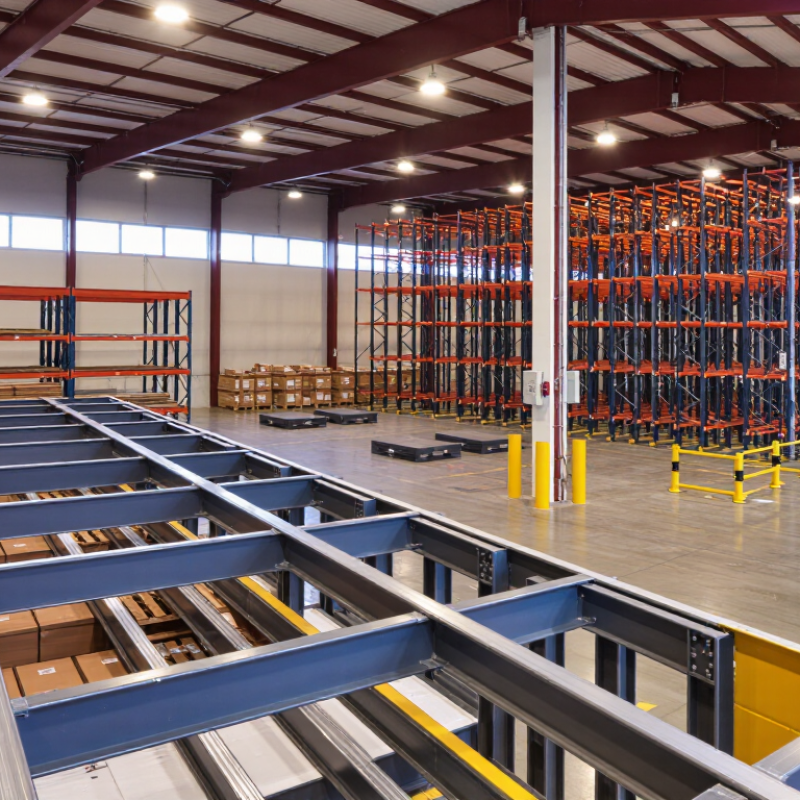
China Top Racking Equipment Manufacturers?

What Defines a Top Racking Equipment Manufacturer in China?

What Defines a Top Racking Equipment Manufacturer in China?

A top racking equipment manufacturer combines practical experience with controlled engineering. Its team should understand pallet sizes, forklift routes, ceiling heights, and warehouse turnover. Good designs begin with accurate site measurements, not attractive drawings. Engineers should calculate load capacity for every beam, upright, and connection. They should also consider seismic conditions, floor strength, and possible future expansion. Small details matter. A loose connector can create expensive problems.

Reliable manufacturers use traceable steel and consistent production controls. Ask for material certificates, welding procedures, coating details, and load-test records. Independent inspections can strengthen confidence, especially for large projects. Clear technical drawings should show dimensions, tolerances, anchoring points, and safe working loads. A professional supplier explains limitations instead of promising everything. That honesty is valuable.

Experience after delivery also defines quality. The manufacturer should provide installation guidance, maintenance instructions, spare-part support, and practical training. Communication must remain clear when measurements change or schedules move. Some suppliers look impressive during sales discussions but respond slowly after payment. That is a warning sign. Factory visits, sample inspections, and customer references can reveal more than polished brochures. No manufacturer is perfect. However, a dependable partner documents mistakes, corrects them quickly, and improves its process.

Key Types of Racking Equipment Produced by Chinese Manufacturers

Chinese racking equipment manufacturers produce several systems for warehouses, factories, and distribution centers. Selective pallet racks remain common because forklifts can access every pallet directly. Drive-in racks increase storage density by reducing aisles. Push-back racks suit products with several pallets per stock-keeping unit. Cantilever racks handle long materials such as pipes, timber, and metal profiles.

Many manufacturers also produce pallet shuttle systems, mezzanine platforms, and automated Storage Equipment. A shuttle system uses a powered carrier inside deep lanes, reducing forklift movement. Mezzanines create additional working space above the warehouse floor. Automated systems combine racks, conveyors, sensors, and control software. Their performance depends on accurate site measurements and stable floor conditions.

In practical projects, rack selection should follow load weight, pallet dimensions, access frequency, and available height. A drawing may look correct but fail when real forklift turning space is checked. Reliable manufacturers should provide load calculations, steel specifications, weld inspection records, and installation guidance. Buyers should also verify beam deflection limits and upright protection details. Small errors matter. A missing column guard can cause expensive damage. Some designs still need revision after a trial installation, especially in older buildings with uneven floors.

How to Evaluate China’s Racking Equipment Manufacturers

China Top Racking Equipment Manufacturers?

How to Evaluate China’s Racking Equipment Manufacturers

Evaluating a racking equipment manufacturer requires more than comparing prices. Review its production experience, engineering team, and completed warehouse projects. A factory visit can reveal useful details. Check steel storage areas, welding lines, coating rooms, and final inspection stations. Clean processes matter.

Request technical drawings, load calculations, and material certificates for every major component. Confirm whether the manufacturer performs static and dynamic load tests. Inspect weld consistency, surface treatment, column thickness, and beam connections. Ask how tolerances are controlled during mass production. Small errors can create installation problems. Safety documentation should match the delivered equipment, not an old template.

Reliable suppliers explain lead times, packaging methods, spare parts, and installation support clearly. Speak with recent customers about delivery accuracy and after-sales response. Check whether the quotation includes testing, shipping preparation, and replacement procedures. A low price may hide important exclusions. No evaluation is perfect. I would also compare communication quality, because delayed answers often become delayed decisions. Some manufacturers present impressive samples, but their larger orders may be less consistent. That risk deserves attention. Reference checks, independent inspections, and written acceptance standards can reduce uncertainty before payment and production.

China Top Racking Equipment Manufacturers? - How to Evaluate China’s Racking Equipment Manufacturers

Evaluation Dimension Recommended Benchmark Evidence to Request Suggested Weight Evaluation Guidance
Structural Design Capability Design calculations should address load capacity, stability, deflection, frame strength, beam connections and accidental impact conditions. Signed structural calculations, design drawings, load tables and project-specific engineering documents. 20% Give the highest score to suppliers that provide project-specific calculations rather than standard catalog capacities only.
Applicable Racking Standards Technical design should reference applicable standards, such as EN 15512 for adjustable pallet racking and EN 15629 for specification of storage equipment. Declaration of design basis, standard list, engineering calculations and inspection procedures. 12% Confirm that the cited standard edition is appropriate for the destination market and equipment type.
Seismic Design For seismic regions, the design should consider the applicable seismic category, site conditions, rack configuration and anchorage requirements; EN 16681 is a recognized reference for adjustable pallet racking in seismic areas. Seismic calculation, anchor design, installation details and project-specific seismic parameters. 8% Do not accept a generic “earthquake-resistant” statement without calculations and anchorage details.
Material Traceability Main structural steel should have documented grade, thickness, batch and mechanical-property information traceable to mill documentation. Material certificates, batch records, incoming inspection reports and production traceability records. 10% Score higher when raw material, forming process and finished components can be linked through lot numbers.
Welding and Fabrication Controls Welded components should be produced under documented procedures, with qualified personnel and inspection appropriate to the joint and risk level. Welding procedure specifications, welder qualifications, inspection records and nonconformance reports. 8% Check dimensional accuracy, weld appearance, distortion control and corrective-action records.
Surface Treatment and Corrosion Protection The coating system should match the warehouse environment, expected service life and required corrosion resistance. Coating specification, dry-film-thickness records, adhesion or appearance inspection results and environmental compliance documents. 8% Evaluate powder-coating or galvanizing controls, pretreatment, coverage consistency and repair procedures.
Factory Quality Management A documented quality management system should control purchasing, production, inspection, nonconformities and corrective actions; ISO 9001 certification is useful supporting evidence. Valid certificate, certification scope, audit records, inspection plan and corrective-action reports. 10% Verify the certificate issuer, validity period, manufacturing scope and production-site address.
Load and Component Testing Testing should cover critical components and connections, with test methods, acceptance criteria and results documented. Laboratory reports, test procedures, calibration certificates and component or connection test records. 8% Prefer independent or accredited laboratory reports when the application involves high loads or unusual configurations.
Installation and Site Safety Installation instructions should define anchoring, tolerances, sequence, inspection points, rack protection and safe working practices. Method statement, installation manual, torque records, handover checklist and installer qualifications. 8% Score higher when the supplier provides on-site supervision, final inspection and documented handover.
Documentation and Compliance Drawings, manuals, declarations, safety labels and maintenance information should be complete, consistent and supplied in the required language. Technical file, bill of materials, operating instructions, inspection forms and product declarations where applicable. 4% Check that drawings, labels, calculations and delivered components use matching dimensions and identification numbers.
After-Sales Support and Spare Parts The supplier should provide inspection guidance, replacement-part identification, damage-reporting procedures and technical support. Service-level terms, spare-part list, response procedure, warranty conditions and sample inspection checklist. 4% Evaluate measurable response times and the ability to supply compatible replacement components over the expected service period.
Total Evaluation Weight 100% Use a consistent 1–5 score for every dimension and multiply each score by its assigned weight.
Scoring method: 5 = fully verified and project-specific; 4 = well documented with minor gaps; 3 = acceptable but incomplete evidence; 2 = significant uncertainty; 1 = no credible evidence supplied. The weighted score supports comparison but does not replace a qualified structural and safety review.

Leading Manufacturing Regions and Industry Capabilities in China

China Top Racking Equipment Manufacturers?

China’s leading racking equipment manufacturers are concentrated in several industrial regions. The Yangtze River Delta, including Jiangsu, Zhejiang, and Shanghai, offers strong steel processing, automation integration, and export logistics. Guangdong and the wider Pearl River Delta specialize in electronics, consumer goods, and fast-moving warehouse systems. Shandong, Hebei, and central China also provide competitive steel fabrication and large-scale production capacity.

Demand continues to expand. The China Federation of Logistics and Purchasing reported total social logistics value of RMB 352.4 trillion in 2023, increasing 5.2% year on year. This growth supports investment in pallet racks, shuttle systems, mezzanines, and automated storage equipment. Regional capability still varies. Some factories excel at welding and coating, while others have better software integration or installation teams. A polished showroom proves little.

Tips: Compare factories by load testing, engineering drawings, quality records, and after-sales response. Request evidence for raw-material thickness, weld inspection, and surface-treatment performance. Check whether the supplier understands EN 15635 or equivalent safety practices. Site audits are useful, but they can also create false confidence when production changes after approval.

According to the National Bureau of Statistics of China, manufacturing remains a major economic foundation, supporting a deep supplier network for steel components, sensors, conveyors, and control systems. Buyers should assess the complete project, not only the lowest quotation. The cheapest frame may require expensive reinforcement later. That risk is often underestimated.

China Racking Equipment Manufacturing Regions

Regional crude steel output is used as an objective indicator of raw-material availability for warehouse racking manufacturing. Hebei, Jiangsu, Shandong, Zhejiang, and Guangdong are important industrial regions with strong steel, metal fabrication, machinery, and logistics capabilities.

Indicator: Estimated crude steel output by province in 2023, measured in million tonnes. Values are rounded from publicly reported Chinese provincial steel-industry statistics and are intended to show regional manufacturing capacity rather than company performance.

Selecting the Right Chinese Racking Equipment Manufacturer for Your Needs

Choosing a Chinese racking equipment manufacturer should begin with your warehouse, not a sales ranking. Measure aisle width, pallet weight, ceiling height, floor tolerance, and forklift turning space. The MHI 2024 Annual Industry Report offers useful context. It reports that 83% of supply-chain leaders expect increased technology and innovation use within five years. Your supplier should understand both storage and automation interfaces.

China’s manufacturing capacity is significant, but capacity alone proves little. The International Federation of Robotics reported 276,288 industrial robot installations in China during 2023, representing 51% of global installations. This supports strong integration potential. However, racking accuracy still depends on engineering controls. Request load calculations, seismic assumptions, steel-grade records, welding procedures, coating specifications, and drawings signed by qualified engineers. Ask for a physical sample. Brochures are not evidence.

Compare manufacturers through an audit, not only a quotation. Check production traceability, inspection equipment, quality records, export references, and after-sales response times. Require a clear tolerance table and installation method statement. Confirm that the design follows applicable standards, such as EN 15635 where relevant. A factory that avoids technical questions is a warning sign. A low price may conceal thinner steel, weaker inspection, or costly site modifications. I have learned that delivery speed can also mislead; rushed approvals create expensive corrections later. Leave room for independent inspection before shipment. No factory is perfect. Your evaluation should show how honestly it handles that fact.