

Top 10 Track Slide Roller Suppliers Worldwide?
Track Slide Roller selection is no longer a simple catalogue exercise. Buyers now compare load capacity, guide accuracy, sealing, noise, service life, and replacement support. A roller that looks robust in a clean showroom may struggle beside abrasive dust, repeated side impacts, or uneven tracks.
Grand View Research and MarketsandMarkets both report continued growth in linear motion and bearing-related equipment, driven by automation, material handling, robotics, and factory modernization. However, their market categories rarely isolate Track Slide Roller products. That limitation matters. Supplier rankings can become misleading when ball guides, cam followers, and profile rollers are grouped together.
Tedric A. Harris, a recognized authority on rolling-bearing analysis, emphasized the practical relationship between operating conditions and bearing life: “Load, lubrication, speed, and contamination determine practical bearing life.” This principle shapes the comparison in this guide. ISO 281 also provides a useful reference for rolling-bearing life calculations, although real track systems often face alignment errors and shock loads beyond laboratory assumptions.
Small details matter.
A sealed roller may reduce maintenance near packaging dust. Hardened raceways may protect a heavily cycled transfer line. In contrast, an inexpensive unit can create vibration, uneven travel, and costly downtime. This review examines ten worldwide suppliers through technical evidence, product range, manufacturing experience, quality systems, and after-sales reliability. Public data remains uneven, so some conclusions require careful judgment rather than blind ranking.
What Are Track Slide Rollers and Where Are They Used?
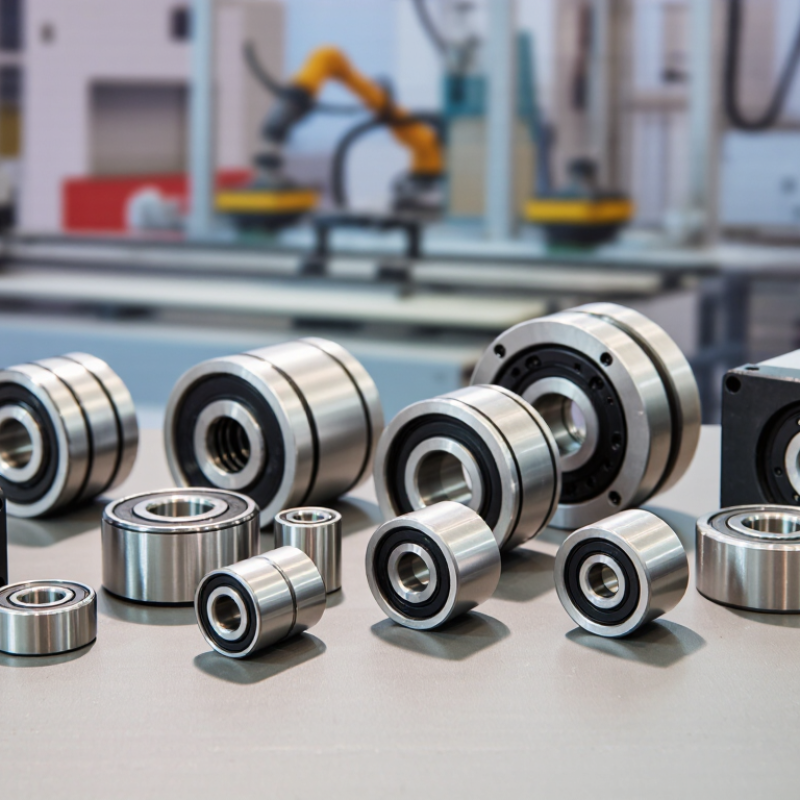
Track slide rollers are compact wheel assemblies that move along a fixed rail or track. They replace much of the friction found in basic sliding systems. A typical assembly may include a steel or polymer wheel, bearing, axle, spacer, and mounting plate. Together, these parts guide doors, panels, carriers, or machine components through repeated movement.
Their uses are broad. They appear in industrial machine guards, warehouse equipment, automated storage systems, sliding partitions, inspection stations, and transport fixtures. The International Federation of Robotics reported 541,302 industrial robot installations worldwide in 2023. That figure shows the growing need for reliable guided motion around automated equipment. Grand View Research also reported strong expansion in automated material-handling equipment through 2030. Track rollers support that growth, although they are only one small component.
A roller can look simple. It is not.
Tip: Check load rating, rail hardness, wheel material, and alignment together. A high load rating means little if the track is dirty or poorly installed. In humid areas, corrosion-resistant parts deserve priority. Measure side clearance with the system installed, not only on a workbench. I have seen premature wear caused by a slightly twisted rail, not a weak roller. That detail is easy to miss. Supplier comparisons should include cycle testing, noise data, spare-part availability, and traceable quality records. Report figures describe market direction, not guaranteed product life. Real performance still depends on installation, maintenance, and operating conditions.
| Rank | Worldwide Supplier Category | Typical Track Slide Roller Products | Common Roller Materials | Typical Bearing or Guide Design | Common Load Range | Typical Applications | Key Buyer Requirements |
|---|---|---|---|---|---|---|---|
| 1 | Linear-motion component suppliers | Cam followers, track rollers, guide rollers and compact roller carriages | Hardened bearing steel, stainless steel, polyurethane-coated steel | Stud-mounted or yoke-type roller with a rolling-element bearing | Light to heavy duty | Automation equipment, transfer units, positioning systems and linear guides | Radial load, axial load, speed, preload, lubrication and mounting space |
| 2 | Industrial bearing manufacturers | Needle-roller track rollers, cylindrical track rollers and sealed follower bearings | Through-hardened alloy steel and corrosion-resistant steel | Needle-roller or full-complement bearing with sealed raceways | Medium to very heavy duty | Machine tools, robotic transfer lines, packaging equipment and industrial machinery | Dynamic load rating, static load rating, fatigue life and operating temperature |
| 3 | Conveyor component suppliers | Conveyor track rollers, guide rollers, side rollers and replacement roller assemblies | Steel, stainless steel, engineering polymer and rubber-coated steel | Sealed ball bearing, plain bushing or flanged roller arrangement | Light to medium duty | Material handling, parcel sorting, warehouse conveyors and assembly lines | Conveyor speed, impact resistance, noise level, contamination protection and cleanability |
| 4 | Machine-tool component suppliers | Precision track rollers, guide rollers and rollers for cam-driven mechanisms | Precision-ground bearing steel and stainless steel | High-accuracy roller bearing with controlled radial clearance | Medium to heavy duty | CNC machines, tool changers, indexing tables and automated machining cells | Runout, dimensional tolerance, surface hardness, stiffness and repeatability |
| 5 | Robotics and automation suppliers | Compact guide rollers, cam followers, carriage rollers and custom roller modules | Steel, stainless steel, polymer and elastomer-coated steel | Sealed ball bearing or low-friction bushing for compact assemblies | Light to medium duty | Robotic axes, pick-and-place systems, sliding doors and automated fixtures | Low friction, low noise, compact dimensions, acceleration and maintenance interval |
| 6 | Heavy-equipment component suppliers | Heavy track rollers, flange rollers, guide wheels and reinforced follower rollers | Forged or heat-treated alloy steel, often with hardened rolling surfaces | Heavy needle bearing, plain bearing or sealed high-load bearing | Heavy to extremely heavy duty | Construction equipment, lifting systems, agricultural machinery and industrial doors | Shock loading, contamination, hardness depth, sealing and field-serviceability |
| 7 | Food-processing equipment suppliers | Washdown-compatible guide rollers, conveyor rollers and hygienic slide rollers | Stainless steel, acetal, nylon and approved food-contact polymers | Sealed stainless bearing or low-maintenance polymer bushing | Light to medium duty | Food conveyors, beverage lines, packaging machines and pharmaceutical equipment | Corrosion resistance, hygienic design, washdown compatibility and material compliance |
| 8 | Architectural and access-system suppliers | Door rollers, sliding-gate rollers, carriage wheels and guide track rollers | Stainless steel, zinc-plated steel, nylon and polyurethane | Ball bearing, plain bushing or adjustable roller carriage | Light to medium duty | Sliding doors, movable partitions, gates, windows and architectural hardware | Quiet operation, corrosion resistance, alignment, wheel profile and service life |
| 9 | Custom engineering and OEM suppliers | Application-specific track rollers, integrated roller blocks and modified assemblies | Material selected according to load, temperature, wear and environment | Customized bearing, bushing, stud, flange or multi-roller arrangement | Application-specific | Special machinery, production systems, laboratory equipment and transport systems | Prototype capability, engineering support, drawings, testing and repeat production |
| 10 | Maintenance and replacement-part suppliers | Standard replacement track rollers, cam followers, guide wheels and repair kits | Standard bearing steel, stainless steel, nylon and polyurethane | Interchangeable sealed bearing or bushing-based roller design | Light to heavy duty | Factory maintenance, conveyor repair, machine refurbishment and spare-parts programs | Dimensional interchangeability, availability, documentation, sealing and total cost |