Blog.

Blog2024-04-08T12:48:33+02:00

Top 10 Light Beam Lamps for Global Buyers?

Choosing among the top 10 Light Beam Lamps requires more than comparing brightness and price. Global buyers need dependable performance in real spaces, from retail aisles and hotel lobbies to outdoor architectural walls. A narrow beam may highlight a sculpture beautifully, yet create harsh shadows across a small showroom.

Richard Kelly, the influential American lighting designer, once said, “Light is not something that can be seen, but rather something that allows us to see.” His observation remains practical today. The best Light Beam Lamps should support visual comfort, accurate color, and controlled illumination without wasting energy.

This guide examines beam angle, lumen output, color temperature, CRI, housing materials, heat management, and dimming compatibility. It also considers voltage ranges, plug standards, IP ratings, warranty terms, and supplier documentation. These details matter when products cross borders.

Some lamps look impressive in product photos. They may disappoint under a high ceiling. Others offer powerful beams but reveal uneven color at the edges. That is an easy detail to miss.

The selection below is designed for importers, distributors, designers, and project buyers who need practical comparisons. Testing conditions still differ between manufacturers, so no ranking should be treated as permanent. A lamp suitable for a museum may be unsuitable for a warehouse or residential corridor. Reflective surfaces, mounting height, ambient light, and local electrical requirements can change the result.

The strongest choice is rarely the brightest one. It is the lamp that fits the space, installation plan, maintenance expectations, and verified safety requirements.
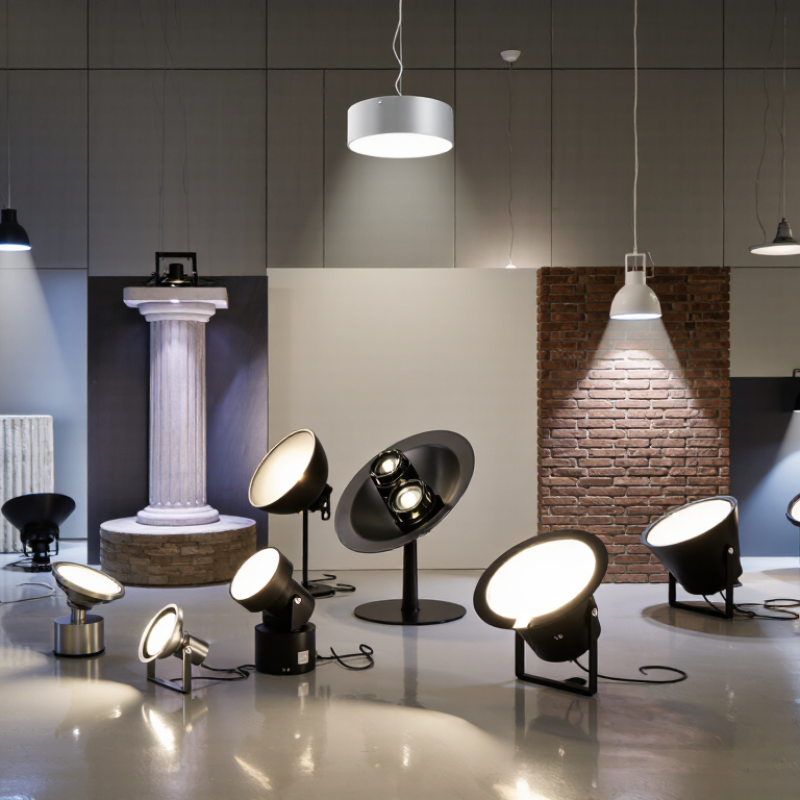
Top 10 Light Beam Lamps for Global Buyers?

What Light Beam Lamps Are and How They Work

Light beam lamps direct light through a reflector, lens, or both.

Unlike broad room lights, they create a controlled cone for displays, work areas, roads, or architectural surfaces. Beam angle defines spread: a 15-degree optic produces a narrow, intense spot, while a 40-degree optic covers a wider area with softer edges.

Lumens measure total light; candelas better describe beam intensity. That distinction matters.

The lamp’s driver converts incoming electricity into stable current for the LED. Heat then moves through the circuit board and housing, often using aluminum fins. Excess heat reduces output and shortens component life.

The U.S. Department of Energy reports that LED lighting can use up to 75% less energy and last up to 25 times longer than incandescent lighting. Real performance still depends on cooling, optics, and driver quality.

Testing should include color temperature, color rendering, flicker, beam angle, and lumen maintenance. The Illuminating Engineering Society’s LM-79 and LM-80 methods support more reliable photometric and lifetime comparisons.

The International Energy Agency has identified lighting as roughly 15% of global electricity use, so efficiency remains commercially important. Still, a higher lumen rating does not guarantee better visibility.

Glare can ruin a carefully lit surface. I have also seen published beam angles differ from field results, especially after installation behind glass or protective covers.

Product data needs skepticism, not blind confidence.

Main Types of Light Beam Lamps for Global Buyers

Main Types of Light Beam Lamps for Global Buyers

Light beam lamps differ mainly by source, beam angle, and control method. Narrow-beam LED spotlights create sharp pools of light for retail displays, galleries, and high ceilings. Flood-beam LED fixtures spread light across loading areas or walkways. Zoomable models offer flexibility, but their moving optics may need more maintenance. Laser-based lamps produce long, concentrated beams, while high-intensity discharge lamps remain useful for large venues. Halogen lamps still deliver warm color, though their heat and energy use limit modern applications.

LED technology deserves close attention. The International Energy Agency reports that lighting represents about 15% of global electricity use. The U.S. Department of Energy has recorded laboratory LED efficacies above 200 lumens per watt, but complete fixtures usually perform below that level. Look beyond the headline number. Check delivered lumens, beam angle, color rendering, flicker, and operating temperature. A 15-degree beam can highlight a two-meter display, while a 60-degree beam may brighten a warehouse aisle more evenly.

Mounting conditions matter.

Global buyers should compare photometric files, ingress protection, voltage range, and warranty terms. Professional lighting tests should follow recognized measurement procedures, such as those developed by the International Commission on Illumination. A practical mistake is choosing the brightest lamp first. Glare, dark edges, and poor heat removal can make a powerful fixture disappointing. That lesson is easy to miss.

Key Performance Features to Compare Across the Top 10

Top 10 Light Beam Lamps for Global Buyers

When comparing the top ten light beam lamps, measure useful output, not only advertised brightness. Lux readings should be taken at the same distance and angle. A narrow beam can look stronger while covering less working space. Check the beam angle, center intensity, spill control, and color uniformity across the lens.

Color accuracy matters in workshops, inspection areas, and photography. Look for a high CRI, stable color temperature, and low flicker under camera recording. A lamp may appear comfortable to the eye but still create visible banding on video. Test several brightness levels. Performance can change noticeably after dimming.

Heat management separates dependable lamps from short-lived products. Compare cooling fins, thermal protection, duty-cycle ratings, and output after thirty minutes. Battery models also need capacity, charging time, connector quality, and safe overcharge control. Check IP protection for outdoor or dusty environments, but verify what the rating actually covers. Mounting strength, switch feedback, and repairable parts affect daily use.

Small details matter. A loose bracket can ruin precise aiming. I would not treat the highest lux figure as the best choice. My comparison can still miss long-term failures without extended testing. Buyers should request test conditions, photometric files, warranty terms, and regional electrical compliance documents before ordering. Availability of replacement batteries may matter more than a slightly brighter beam.

Safety Standards and Regional Compliance Requirements

Top 10 Light Beam Lamps for Global Buyers?

Safety Standards and Regional Compliance Requirements

Choosing among the top 10 light beam lamps requires more than comparing brightness and price. Buyers should review photobiological safety, electrical protection, heat control, and optical output. Standards such as IEC 62471 can help assess risks from intense visible or ultraviolet light. General lighting products may also require testing under relevant IEC 60598 requirements. A beam lamp using laser technology may face stricter controls than a conventional LED model. The distinction matters.

Regional compliance changes the buying decision. European shipments may require applicable conformity documentation and technical files. Products sold in the United States often need recognized electrical safety evaluation and electromagnetic compatibility testing. The United Kingdom, Canada, Australia, and other markets may request different marks, plugs, voltage ranges, or importer details. Do not trust a printed symbol alone. Ask for recent test reports, model-specific certificates, and a declaration covering the exact lamp version.

Tips: Check the target country before ordering. Confirm input voltage, frequency, plug type, IP rating, and operating temperature. Keep installation instructions in the required local language. Inspect beam lamps for exposed wiring, unstable stands, and unclear warning labels. In my experience, suppliers sometimes provide incomplete files, especially after small design changes. That weakness deserves attention. Regulations also change, so verify requirements with an accredited laboratory, customs adviser, or local authority before shipment.

How to Choose the Best Light Beam Lamp for Your Needs

Top 10 Light Beam Lamps for Global Buyers?

How to Choose the Best Light Beam Lamp for Your Needs

Choosing a light beam lamp starts with the beam angle, not appearance. A 15° beam creates a sharp spotlight for artwork or display shelves. A 36° beam spreads light across a dining table. Check lumens, not wattage, because brightness depends on optical efficiency. For comfortable indoor use, choose a color temperature between 2700K and 4000K. A CRI of 90 or higher reveals skin tones and product colors more naturally. ENERGY STAR reports that certified LED lighting uses at least 75% less energy and lasts up to 25 times longer than incandescent lighting.

The lamp’s environment matters. Outdoor buyers should check an appropriate IP rating, sealed connectors, and resistance to temperature changes. For offices, museums, and retail spaces, test glare and flicker before ordering large quantities. The U.S. Department of Energy’s Solid-State Lighting research identifies efficiency, color quality, and controllability as key development priorities. Dimming compatibility remains imperfect, however. A lamp may dim smoothly with one driver and flicker with another. Ask for photometric files, tested lifetime data, and warranty terms. Marketing claims alone are weak evidence.

Tips: Place a sample lamp at the real mounting height. Compare its beam on a white wall and a textured surface. Check shadows, glare, and color shifts. If the beam feels too narrow, it probably is.