Blog.

Blog2024-04-08T12:48:33+02:00

China Top Porch Doors and Windows Suppliers?

Choosing China’s top porch doors and windows suppliers takes more than comparing catalog photos. A bright showroom can hide details that matter outdoors. Ask about frame materials, glass specifications, drainage design, hardware, and finish durability. Request technical drawings and product samples before discussing a large order. Small checks matter.

Building-science expert Joe Lstiburek has said, “All buildings leak air.” That reminder is relevant to porch doors and windows, where gaps, poor sealing, and installation errors can affect comfort. A well-made product still needs careful fitting. No supplier can fix every site problem from a factory.

This guide introduces Chinese manufacturers and explains how buyers can assess their capabilities. It considers production experience, customization options, quality-control procedures, communication, and export support. Look for clear answers, not just polished promises. Ask how the supplier tests products and handles defects. Verify certifications against the exact product and destination market; a logo alone proves little. Photos help, but they are not a substitute for written specifications.

There is no perfect supplier. Some buyers may prioritize price, while others need custom sizes, reliable lead times, or detailed documentation. Trade-offs deserve honest attention. The sections ahead offer practical questions to help identify a suitable partner for your project.
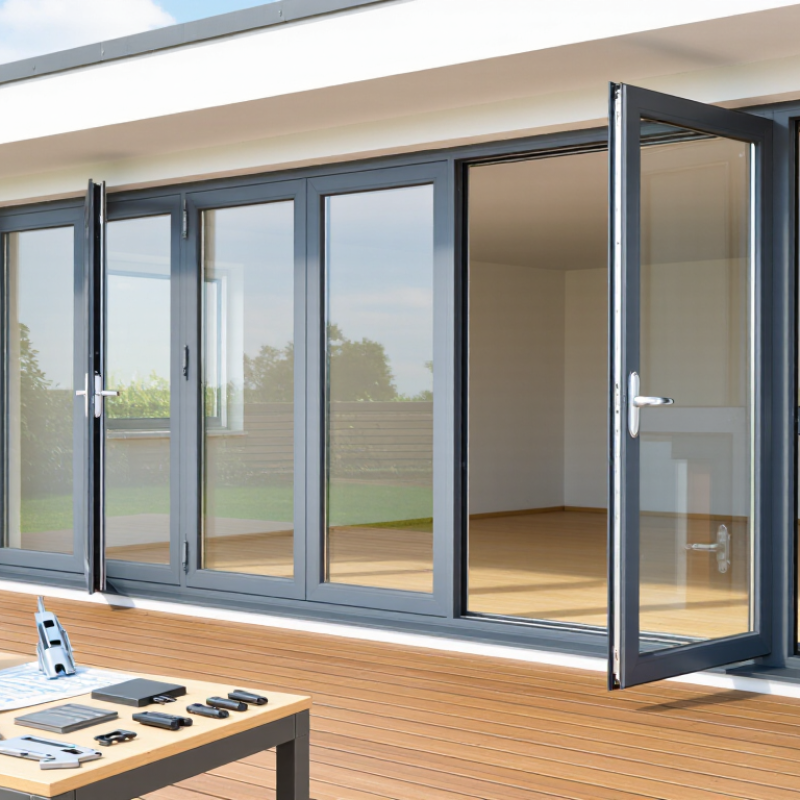
China Top Porch Doors and Windows Suppliers?

Understanding Porch Doors and Windows in Residential Design

A porch is a transition between outdoors and indoors, so its doors and windows should suit both spaces. In a sunny entry, clear glazing can brighten the hall, while a shaded porch may benefit from larger window openings. Light matters. Consider how the door swings, where furniture sits, and whether the threshold is easy to cross. A poorly placed door can interrupt the path from the garden or make a narrow entry feel cramped.

Weather protection deserves equal attention. Frames, seals, and sill details help limit drafts and rain entry, but installation matters too. Ask suppliers how their products handle the local climate, what maintenance the finishes require, and whether replacement parts are available. Check that window openings support safe ventilation without compromising the porch’s intended use. Details matter. A sample in a showroom may look different beside your home’s brick, timber, or painted trim.

Style should connect the porch to the rest of the house without copying every detail. Match proportions and sightlines, then choose glazing and frame finishes that work with the façade. I would avoid choosing by appearance alone; a slim frame can look elegant, yet may not suit every exposure or budget. Not always. Compare specifications and installation plans, and leave room to reconsider assumptions after measuring the actual opening.

How China’s Porch Door and Window Supply Market Is Organized

China Top Porch Doors and Windows Suppliers?

How China’s Porch Door and Window Supply Market Is Organized

China’s porch-door and window market is a layered production network, not a single factory category. Upstream suppliers produce aluminum profiles, glass, seals, and hardware. Fabricators cut, weld, glaze, and assemble units to order. System integrators coordinate profiles, drainage design, thermal breaks, and compatible fittings. Distributors and export agents handle quotations, packing, and delivery. Each handoff matters: good glass cannot correct a poorly squared frame.

Demand is uneven. China’s National Bureau of Statistics reported that completed building floor area rose 17.0% in 2023, while new starts fell 20.4% (National Real Estate Development and Sales in 2023). These figures suggest a mixed construction pipeline, but they do not measure porch products specifically. Buyers should check a supplier’s actual production scope rather than rely on broad “manufacturer” labels. Ask who controls the drawings, checks drainage, and supplies replacement parts. Details get missed. Sometimes by everyone.

Tips: Request a physical corner sample and a written bill of materials. Compare dimensions, glazing thickness, hardware grade, finish, and packing with the approved drawing. Confirm that testing data covers the exact quoted configuration; a certificate for another window system proves little.

Types of Chinese Suppliers and Their Product Specialties

Chinese porch door and window suppliers generally fall into three groups: system manufacturers, custom fabricators, and export-oriented trading companies. System manufacturers often focus on aluminum or uPVC ranges, with matching frames, screens, and hardware. Their catalogues can make sizing easier. Custom fabricators adapt openings, colors, and glazing, which helps with older homes or unusual porch layouts. Export-oriented firms may coordinate several factories and combine doors, windows, and accessories in one order. Their product range can be broad, but confirm who handles technical questions and after-sales parts.

Specialties vary by material and production setup. Aluminum suppliers commonly offer slim sightlines, powder-coated finishes, and sliding panels; ask how the finish performs near coastal air. uPVC suppliers often emphasize insulated frames and low-maintenance surfaces, while wood-focused workshops may provide warmer detailing and custom profiles. Some factories build hinged porch doors with full-height glass, insect screens, or multi-point locks. Details matter. Request section drawings, opening dimensions, drainage locations, glass specifications, and hardware schedules before approving production. A corner sample can reveal finish and joint quality better than a catalogue image. Supplier categories are useful, but imperfect: one factory may make standard systems and custom units. Compare the actual product and process, not only the supplier label.

Criteria for Evaluating Leading Porch Door and Window Suppliers

Evaluating porch door and window suppliers in China starts with the project’s actual exposure. A covered entrance may still face wind-driven rain, salt air, strong sun, or large temperature swings. Ask how frames, seals, glazing, drainage paths, and hardware are specified for those conditions. Details matter. Request current product data, material descriptions, and test reports tied to the exact model, not a similar-looking sample. Confirm who performed the testing and whether documents can be independently verified. Clear answers are useful; vague claims about “all-weather” performance are not.

Review manufacturing consistency as carefully as appearance. Ask about dimensional tolerances, inspection steps, packaging, and how defects are recorded before shipment. Request photos or video of production checks, plus references for comparable porch projects. Then discuss installation. Even a well-made unit can leak if sill preparation, flashing, or fixing points are misunderstood. Check whether drawings, installation guidance, replacement parts, and warranty terms are available in writing. Clarify lead times and how changes are approved. A low quote may exclude useful options, so compare like for like. Some suppliers communicate well before payment, then respond slowly to technical questions. That possibility deserves attention.

China Top Porch Doors and Windows Suppliers? - Criteria for Evaluating Leading Porch Door and Window Suppliers

Use this comparison framework to assess suppliers of porch doors and windows. The weightings are suggested evaluation criteria, not claims about any specific supplier. Confirm that documents and test results apply to the quoted product configuration and the project’s destination market.

Evaluation Criterion Suggested Weight What to Check Evidence to Request
Product performance 18% Assess air leakage, water penetration, wind-load resistance, operating force, and thermal performance where relevant. Requirements depend on the building design, exposure, climate, and applicable local codes. Product-specific test reports, declared performance values, test configuration, and confirmation that the tested size, frame, glazing, hardware, and seals match the proposed specification.
Materials and construction 14% Review frame material and finish, glazing build-up, weather seals, drainage details, reinforcement where applicable, and compatibility of components. For exterior use, consider corrosion and moisture exposure. Material and glass specifications, section drawings, finish details, component data sheets, and documented inspection or acceptance criteria.
Standards and compliance 12% Check whether the proposed products meet the building, safety, energy, and product requirements applicable to the installation location. Requirements can differ by country, region, and project type. Current certificates or test documentation where required, standard references and editions, product scope, issuing body details, and any destination-market compliance documents.
Customization and technical support 10% Evaluate the supplier’s ability to handle opening dimensions, configurations, glazing options, finishes, hardware, screens, and installation constraints without compromising stated performance. Reviewed shop drawings, specification sheets, written confirmation of project requirements, and a clear process for approving revisions before production.
Manufacturing quality control 12% Look for documented controls covering incoming materials, fabrication, assembly, dimensional checks, finish inspection, and final operation. Check how nonconforming items are recorded and corrected. Quality-control plan, inspection records or sample forms, traceability approach, calibration records where relevant, and details of corrective-action procedures.
Installation and after-sales support 10% Confirm that installation instructions, maintenance guidance, replacement-part support, and warranty terms are clear. Identify responsibilities for measurement, installation, adjustment, and service. Installation manuals, maintenance instructions, written warranty terms, service contact process, and stated availability of replacement components.
Lead time and delivery planning 8% Review the stated production schedule, approval milestones, packaging plan, shipping assumptions, and how delays or changes are communicated. Compare like-for-like delivery terms. Written quotation with schedule assumptions, order milestones, packaging details, delivery terms, and a documented process for schedule updates.
Packaging and shipment protection 6% Check how frames, glass, hardware, and finished surfaces are protected during handling and transport. Packaging should suit the shipping method and the risk of damage in transit. Packaging specifications or photos, loading and handling instructions, and a written procedure for documenting and reporting transit damage.
Commercial clarity 6% Compare the scope of supply, exclusions, payment schedule, quotation validity, change-order terms, and responsibility for taxes, freight, and installation. Itemized quotation, clear terms and conditions, defined inclusions and exclusions, and written procedures for changes, claims, and dispute resolution.
Communication and project management 4% Assess response clarity, technical coordination, document control, and the supplier’s process for handling questions, approvals, and project changes. Named project contact or support channel, sample document workflow, response-time commitments if offered, and a record of approved specifications.
Total suggested weighting 100% Adjust the weighting to reflect project priorities, local regulations, climate, building design, and procurement requirements.

Suggested scoring: Rate each criterion from 1 to 5, where 1 = insufficient evidence or major gaps, 3 = meets the documented project requirements, and 5 = strong, relevant evidence with clearly defined processes. Multiply each rating by its criterion weight to compare shortlisted suppliers consistently.

Sourcing, Quality Checks, and Delivery Considerations

Sourcing porch doors and windows from China starts with a clear specification, not a low unit price. State the opening sizes, frame material, glass build-up, screen type, hardware finish, and required thermal and water performance. Ask suppliers for test reports matching the exact proposed assembly; a certificate for similar glass or another frame is not enough. The U.S. Department of Energy reports that windows account for about 25–30% of residential heating and cooling energy use. That makes glass selection and airtight installation practical cost issues, not cosmetic details.

Quality checks should happen before mass production. Approve a full-size sample where possible, then check diagonal measurements, corner joints, drainage slots, locks, and seals. Spray-test a representative unit and record the results. Keep dated photos and a signed inspection checklist. Small gaps matter. A tidy sample can still conceal inconsistent production, so inspect randomly selected finished units before packing. This step takes time, but replacing a poorly fitting door after delivery takes more.

Delivery planning needs equal attention. Confirm packing dimensions, pallet protection, labeling, container loading photos, and responsibility for damage in writing. The World Bank’s 2023 Logistics Performance Index ranked China 19th overall; that national ranking cannot predict an individual shipment’s timing. Build in buffer days, especially around port congestion or seasonal demand. Share final site measurements early. Even careful suppliers can make mistakes, and buyers should leave room to catch them.