

2026 Best Manufactured Windows for Global Buyers?
Choosing the right manufactured windows for global projects in 2026 requires more than comparing prices or attractive product photos. Buyers must examine thermal performance, frame materials, glazing options, installation methods, warranty terms, and supply reliability. A window that performs well in a cold Nordic home may feel unsuitable in a humid coastal apartment. Context matters.
This guide evaluates manufactured windows through practical, buyer-focused criteria. It considers u-values, solar heat gain, air leakage, water resistance, acoustic control, and expected service life. It also examines vinyl, aluminum, fiberglass, wood, and composite frames. Real project details matter, such as factory tolerances, packaging quality, container protection, and replacement-part access. A beautiful window means little if damaged units arrive or local installers cannot adjust them correctly.
No ranking is perfect.
Market data changes quickly, and published specifications do not always reflect field performance. That is why buyers should request verified test reports, installation instructions, sample profiles, and clear warranty conditions. Local climate and building requirements must also be checked with qualified professionals before ordering. A low price can hide higher transport, maintenance, or installation costs. Conversely, premium pricing does not guarantee superior results. Careful comparison remains essential.
The following overview highlights promising options for international buyers seeking durability, energy efficiency, design flexibility, and dependable manufacturing. It does not treat one material as universally best. Instead, it encourages a more realistic question: which window system fits the building, climate, budget, and support network most reliably?
What Are Manufactured Windows and How Are They Made?
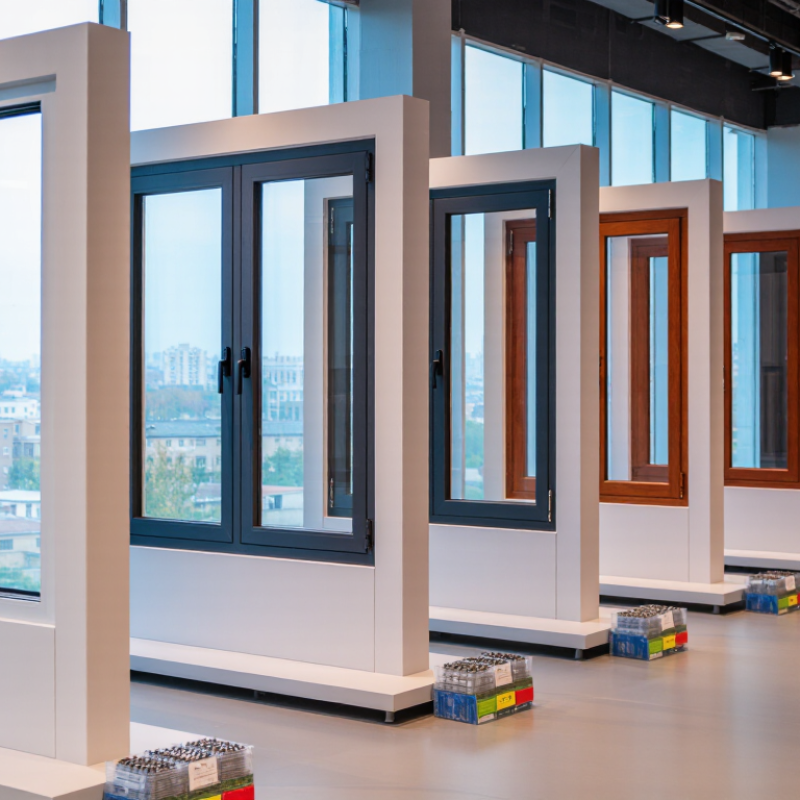
Manufactured windows are factory-made building components designed for consistent performance, accurate sizing, and faster installation. They may use vinyl, aluminum, wood, or composite frames. Each material behaves differently in heat, moisture, and sunlight. Buyers should study those differences before selecting a window for a specific climate.
Production begins with measured frame profiles, which are cut or formed under controlled conditions. Workers then join the corners, install drainage paths, and prepare spaces for glass and hardware. Insulating glass units usually contain two or more panes, a sealed air gap, and protective edge seals. Some windows include low-emissivity coatings to reduce heat transfer. Factory testing may check air leakage, water resistance, operating force, and structural strength. Small defects still matter.
In practical inspections, uneven gaps, weak seals, and poor drainage often create trouble later. A window can look attractive yet perform poorly after installation. Accurate opening measurements are essential, especially in older buildings with uneven walls. Buyers should request test data, material details, warranty terms, and installation guidance from a qualified supplier. Local weather also deserves attention. A design suitable for a cool region may trap excessive heat in a tropical one. I once assumed thicker glass always meant better performance, but frame quality and sealing can matter just as much. That is an easy mistake to repeat.
2026 Best Manufactured Windows for Global Buyers? – What Are Manufactured Windows and How Are They Made?
| Window Type / Stage | Typical Materials or Specifications | How It Is Manufactured | Typical Thermal Performance | Main Advantages | Key Buyer Considerations |
|---|---|---|---|---|---|
| What Are Manufactured Windows? | Factory-produced window units made from engineered frames, glazing, seals, hardware and finishes. | Profiles are formed, cut and assembled in controlled production lines; glass units are fabricated separately and installed into the frame. | Performance depends on the frame, glazing, spacers, seals, installation and climate. | Consistent dimensions, repeatable quality, faster installation and easier bulk procurement. | Confirm local building-code compliance, tested dimensions, drainage design and installation requirements. |
| uPVC / Vinyl Windows | Multi-chamber rigid PVC profiles, galvanized steel or composite reinforcement, EPDM or flexible seals. | PVC resin is extruded into hollow profiles, cooled, cut, welded or mechanically joined, reinforced and fitted with hardware and glazing. | Typical double-glazed units: approximately 1.1–1.6 W/m²K whole-window U-value, depending on design. | Good insulation, low maintenance, corrosion resistance and competitive cost. | Allow for thermal expansion; verify reinforcement, UV stability, color limitations and local fire requirements. |
| Thermally Broken Aluminum Windows | Aluminum alloy frames with polyamide thermal barriers, gaskets and powder-coated or anodized finishes. | Aluminum billets are extruded, aged, cut, machined and assembled; thermal barriers are inserted before frame fabrication and finishing. | Typical double-glazed units: approximately 1.3–2.0 W/m²K whole-window U-value, depending on the thermal break and glazing. | Slim sightlines, high structural strength, large opening capability and strong weather resistance. | Non-thermally broken frames can perform poorly; check thermal-break width, coating quality and condensation risk. |
| Wood Windows | Engineered or solid timber, protective coatings, insulated glass and weather seals. | Timber is kiln-dried, finger-jointed or laminated, machined into profiles, coated, assembled and fitted with glazing and hardware. | Typical double-glazed units: approximately 1.1–1.6 W/m²K whole-window U-value, subject to frame depth and glazing. | Natural appearance, good insulation and suitability for heritage or premium residential projects. | Requires periodic coating maintenance and careful moisture management; verify timber treatment and coating system. |
| Fiberglass / Composite Windows | Glass-fiber-reinforced polymer or composite profiles, insulated glazing and durable seals. | Profiles are commonly pultruded or molded, cut and joined, then finished with coatings, hardware and glazing. | Often approximately 1.0–1.5 W/m²K with efficient double glazing; exact results require certified testing. | Low thermal expansion, dimensional stability, strength and relatively low maintenance. | Check regional availability, repairability, finish options and compatibility with local installation methods. |
| Single Glazing | One pane of clear or coated glass, commonly around 4–6 mm thick. | Glass is cut, edge-finished, washed and installed with gaskets, sealants or glazing beads. | Center-of-glass U-value is commonly about 5.5–6.0 W/m²K for clear glass. | Low purchase cost, lower weight and simple fabrication. | Generally unsuitable for energy-efficient buildings or cold climates without additional design measures. |
| Double-Glazed Insulating Glass Unit | Two panes, sealed spacer cavity, desiccant and air or inert-gas fill; common cavity width is about 12–16 mm. | Glass is washed, spaced, sealed around the perimeter and sometimes gas-filled before final assembly into the frame. | Typical center-of-glass U-value is about 1.0–2.8 W/m²K, depending on coatings, gas, spacer and glass thickness. | Improved insulation and sound reduction compared with single glazing. | Specify low-emissivity coating, warm-edge spacer, cavity width and edge-seal durability. |
| Triple-Glazed Insulating Glass Unit | Three panes with two sealed cavities, often using low-emissivity coatings and inert-gas fills. | Three processed panes are aligned with two spacers, sealed and gas-filled before installation in a reinforced frame. | Typical center-of-glass U-value is about 0.5–0.8 W/m²K; whole-window values are higher. | Excellent thermal insulation and better interior surface temperature in cold conditions. | Higher weight, cost and frame depth; verify hardware capacity and solar-control requirements. |
| Low-E Glass | Glass with a microscopically thin low-emissivity coating that reflects long-wave heat. | The coating is applied by online pyrolytic processing or offline vacuum sputtering, followed by cutting and insulating-unit assembly. | Can reduce heat transfer substantially; solar heat-gain coefficient commonly ranges from about 0.25–0.65. | Improves energy efficiency while allowing daylight; solar-control versions reduce overheating. | Select coating orientation and solar-control level according to heating, cooling and daylight needs. |
| Factory Quality-Control Checks | Dimensional accuracy, visual quality, operation, drainage, air leakage, water penetration and structural resistance. | Inspection occurs during profile production, frame assembly, glazing and final packaging; certified laboratories may perform standardized tests. | Performance should be reported using the applicable regional standard and test method. | Reduces installation problems and supports consistent project performance. | Request test reports, product drawings, tolerances, warranties and installation instructions before ordering. |
| Global Buyer Selection Priorities | Frame material, glazing configuration, climate zone, opening style, dimensions and local compliance. | Manufacturing should be based on approved shop drawings and a documented bill of materials. | Compare whole-window U-value, solar heat-gain coefficient, visible transmittance and air-leakage performance. | A balanced specification can improve comfort, energy use, durability and lifecycle value. | Do not compare isolated glass data with whole-window data; confirm units, test standards and climate suitability. |
Note: Performance figures are typical industry ranges for orientation and comparison only. Actual values vary with frame geometry, glass coating, spacer, gas fill, size, opening style, installation and the applicable regional test standard.
Related Posts
-
2026 Best Manufactured Windows for Global Buyers
-
Why Choose Okna Windows for Your Home Improvement Needs?
-
Best Front Doors and Windows for Home Buyers in 2026?
-

Top Green Windows for Energy Efficient Buildings?
-
Why Choosing the Right Doors and Windows Matters for Your Home
-
What is the Importance of Porch Doors and Windows in Home Design?