Blog.

Blog2024-04-08T12:48:33+02:00

How to Choose Euro Doors and Windows?

Choosing euro doors and windows involves more than comparing attractive profiles and advertised prices. The right choice should match your climate, building structure, daily habits, and long-term maintenance expectations. A well-designed window can reduce drafts, soften street noise, and bring controlled daylight into a room. However, performance depends on installation as much as product quality. Even excellent frames may fail when openings are poorly measured or drainage paths are blocked.

Begin by examining frame materials, glazing layers, seals, hardware, and thermal performance. PVC profiles are often practical and low-maintenance. Aluminum frames provide slim sightlines and strong structural support. Timber offers warmth and character, but it needs more careful finishing. Double glazing may suit moderate conditions, while triple glazing can improve comfort in colder environments. Ask manufacturers for verified performance data, warranty terms, and maintenance guidance. Do not rely only on showroom displays.

Small details matter.

Measure wall thickness, sill depth, opening direction, and exterior exposure before ordering. Consider how rain, sunlight, wind, and indoor humidity affect each opening. A qualified installer should explain fixing methods, sealing materials, ventilation, and aftercare clearly. Independent certifications can strengthen confidence, but they do not replace site-specific judgment. I have seen attractive specifications become disappointing results after rushed installation. That possibility deserves honest attention. The best decision balances appearance, energy efficiency, security, budget, repair access, and expected service life. This guide will help you compare these factors carefully and choose euro doors and windows with fewer costly surprises.
How to Choose Euro Doors and Windows?

Define Your Needs for Euro Doors and Windows

How to Choose Euro Doors and Windows?

Define Your Needs for Euro Doors and Windows

Choosing Euro doors and windows should begin with your daily habits, not appearance. In renovation projects, I have seen beautiful units fail because the opening style did not suit the room. Ask how often you ventilate, where furniture sits, and whether children or pets use the space.

A tilt-and-turn window may provide controlled airflow, while a sliding door can save interior space. Measure each opening carefully. Old walls are rarely perfectly square. This detail is easy to overlook.

Think about your local climate and the direction of sunlight. Low-emissivity glazing can reduce heat loss, but the right glass depends on orientation and shading. Moisture resistance matters in kitchens and bathrooms. Strong seals also help reduce drafts and outside noise.

Request documented performance values, installation guidance, and warranty terms. Reliable information is more useful than a polished showroom display. I would still ask an independent installer to verify the details.

Tips:

Write down your priorities before comparing products. Rank:

  • ventilation
  • security
  • noise control
  • energy efficiency
  • maintenance

Keep the list short. Check frame samples in daylight. Dark finishes may absorb more heat. Also, leave room in your budget for professional installation. A good window installed poorly can perform badly. Mistakes happen, especially with rushed measurements.

Compare Materials, Styles, and Opening Configurations

How to Choose Euro Doors and Windows?

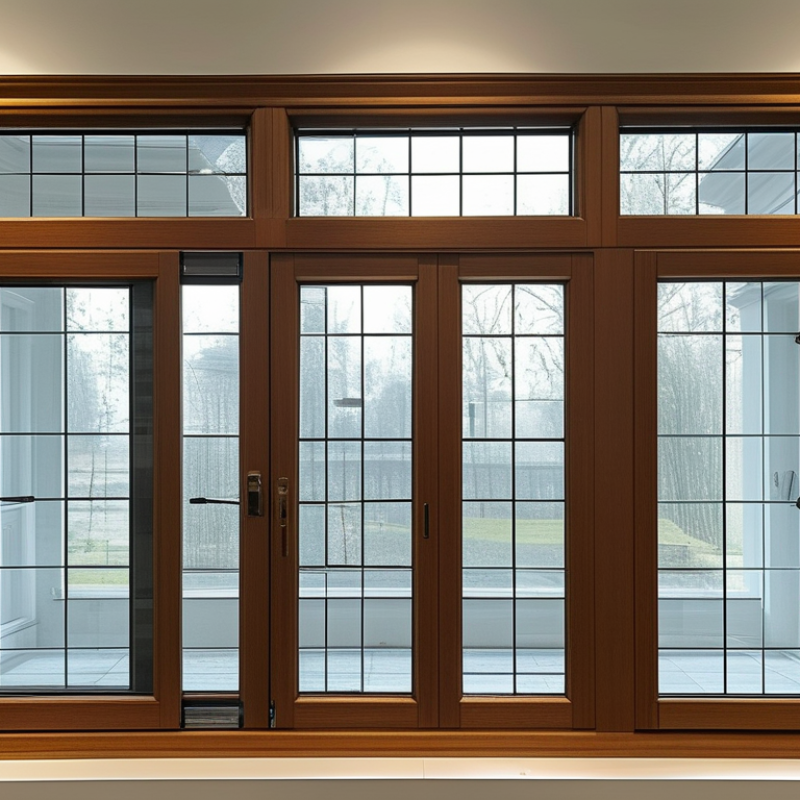
Choosing Euro doors and windows starts with matching materials to your climate, building structure, and maintenance habits. uPVC offers strong insulation and generally needs little upkeep. Aluminum frames look slim and modern, but they need a reliable thermal break. Timber brings warmth and character, though it requires regular sealing. Composite frames can balance durability and appearance, but their construction varies widely.

Style affects both appearance and daily comfort. Casement windows open outward and provide broad ventilation. Tilt-and-turn windows offer secure ventilation from the top and easier cleaning from inside. Sliding doors save space, but their seals and rollers need careful inspection. French doors create a classic opening, although they require enough wall clearance. Measure the furniture path, not only the rough opening.

Opening direction matters more than many homeowners expect. Check handles, hinges, escape routes, and nearby walls before ordering. In windy areas, outward openings may need stronger hardware. For rainy climates, inspect drainage channels and weather seals closely. Ask for tested thermal and acoustic performance, not vague efficiency claims. Glass choice matters too. Double glazing may suit moderate conditions, while triple glazing adds weight and cost.

I learned this the hard way.

My first comparison focused too heavily on frame color. I overlooked sill height and daily cleaning access. A qualified installer should verify measurements, structural support, and local safety requirements. Small errors can cause drafts, water entry, or difficult operation. The cheapest option is not always the most dependable. Nor is the most expensive.

Evaluate Energy Efficiency, Glass, and Weather Performance

How to Choose Euro Doors and Windows?

Energy efficiency starts with the whole window, not the glass alone. The U.S. Department of Energy estimates that windows cause 25–30% of residential heating and cooling energy use. For European projects, compare the complete Uw value in W/m²K. A lower value usually means better insulation. Low-emissivity coatings reduce radiant heat loss, while double or triple glazing improves thermal stability. However, triple glazing can add weight and cost. It is not automatically the best choice for every wall.

Glass should also match the room’s exposure. A lower g-value limits summer solar gain on south-facing or west-facing elevations. High visible-light transmission can keep interiors bright without excessive glare. The International Energy Agency reports that buildings consume about 30% of global final energy. Small specification errors can therefore become expensive over time. Weather performance needs equal attention. Check air permeability under EN 12207, watertightness under EN 12208, and wind resistance under EN 12210. These test classes reveal more than attractive frame profiles.

Tips: Ask for the complete test report, not only a brochure. Inspect the drainage paths and corner seals. Confirm installation tolerances before ordering. A well-rated window can still leak if the frame sits unevenly. I once underestimated sill flashing on a renovation project; the glass performed well, but rain entered around the opening. That mistake was preventable.

Check Dimensions, Installation Requirements, and Building Codes

How to Choose Euro Doors and Windows?
Choosing Euro-style doors and windows starts with measurements, not appearance. Measure the structural opening at three points for width and height. Record the smallest reading. Check the diagonals; a difference can reveal a twisted frame. Leave the required installation gap. It is not wasted space. The U.S. Department of Energy reports that windows can account for 25–30% of residential heating and cooling energy use. This figure describes a broad impact, not a guarantee for every home.
Installation requirements should be confirmed before ordering. Review wall depth, sill support, drainage paths, anchor positions, and waterproofing layers. Heavy glazed doors may need engineered lintels or stronger floor fixing. Request the installation manual and product performance declarations.
European standard EN 14351-1 covers window and external pedestrian door performance, while local rules still control approval. Installers should check plumb, level, square, and air leakage before trims hide the frame. Some projects look excellent and still leak.
Building codes can change the correct specification. Check fire escape sizes, safety glazing, accessibility thresholds, ventilation, thermal performance, and wind loads with the local authority. The 2021 International Energy Conservation Code sets climate-specific U-factor and solar heat-gain limits. Copying a nearby project may fail in another zone. The International Energy Agency’s Buildings 2023 report states that buildings used about 30% of global final energy in 2022. Better windows help only when installation maintains the wall’s air and water control layers. Drawings are useful, yet walls are rarely perfect.

Review Quality, Maintenance, Warranty, and Total Cost

Choosing Euro doors and windows requires more than comparing frame prices. Quality begins with verified performance. Check CE documentation and test results for air permeability, water tightness, and wind resistance under EN 12207, EN 12208, and EN 12210. The European Commission reports that buildings use about 40% of the European Union’s energy. Poor seals can quietly increase heating costs, especially around older masonry openings. Ask for whole-window U-values, not only glass values. Installation quality matters just as much.

Maintenance should be practical. Inspect seals, drainage channels, hinges, and locks at least once a year. A stiff handle may indicate poor alignment, not a faulty lock. Warranty terms deserve careful reading. Look for coverage periods, labor responsibility, glass failure conditions, and exclusions for incorrect installation. Energy Star research estimates that windows can represent 25–30% of household heating and cooling energy use, although results vary by climate and building design. That figure is useful, but not universal. I would treat it as a planning reference, not a promise.

Tips: Request three written quotations with identical specifications. Compare hardware, glazing, installation, disposal, and future servicing. Calculate total cost over 15–20 years. A cheaper unit may need earlier seal replacement. Also, photograph the installation before finishing work. It helps resolve disputes. One overlooked detail remains: beautiful windows can still perform badly when the surrounding wall is damp or poorly insulated.

How to Choose Euro Doors and Windows? - Review Quality, Maintenance, Warranty, and Total Cost
Frame System Typical Thermal Performance Durability and Quality Indicators Maintenance Requirement Typical Warranty Practice Indicative Installed Cost Best Fit Key Trade-Off
Multi-chamber uPVC Typical Uw: 0.75–1.30 W/m²K with double or triple glazing.
Acoustic performance: commonly around 30–45 dB, depending on glass and seals.
  • Look for reinforced profiles where required by size and wind exposure.
  • Check continuous gaskets, welded corners, drainage paths, and stable hardware.
  • For European projects, request test evidence for air permeability, watertightness, and wind resistance under applicable EN standards.
  • Wash and inspect frames and gaskets once or twice a year.
  • Lubricate locking hardware annually.
  • Usually does not require painting.
Low routine maintenance.
Commonly 5–10 years for frame and hardware components; insulated-glass-unit coverage may differ. Confirm exclusions, labor coverage, and seal-failure terms in writing. Approx. €450–€900/m²
Installed window cost for standard sizes and ordinary access conditions.
Budget-conscious residential renovations, apartments, and projects prioritizing thermal efficiency with limited upkeep. Lower cost and easy care, but large openings may require careful reinforcement and may offer fewer slim-frame design options.
Thermally broken aluminum Typical Uw: 0.80–1.40 W/m²K with high-performance glazing.
Acoustic performance: commonly around 32–46 dB, depending on the glazing specification.
  • Verify a continuous thermal break rather than a basic non-insulated aluminum section.
  • Check coating quality, corner joints, drainage, hardware load ratings, and deflection limits.
  • Powder-coating or anodizing should be specified for the intended exposure and environment.
  • Clean coated surfaces with mild detergent two or more times per year in coastal or polluted areas.
  • Keep drainage channels clear.
  • Inspect and lubricate hardware annually.
Low to moderate maintenance.
Commonly 5–10 years for frames, coatings, and hardware, subject to finish and supplier terms. Glass, seals, and moving parts may have separate coverage. Approx. €650–€1,300/m²
Installed cost for thermally improved profiles with standard architectural finishes.
Large windows, sliding doors, modern façades, high wind exposure, and projects requiring narrow visible sightlines. Strong, slim, and dimensionally stable, but usually costs more and can feel colder if the thermal break and glass specification are inadequate.
Timber Typical Uw: 0.75–1.30 W/m²K with modern insulated glazing.
Acoustic performance: commonly around 30–45 dB, depending on glass, seals, and construction.
  • Assess timber species, moisture content, finger-jointed areas, drainage details, and coating quality.
  • Look for factory-applied primer or finish on all exposed faces and end grains.
  • Confirm that the design permits replacement or renewal of weather seals.
  • Inspect finish, joints, and sealant at least annually.
  • Clean and renew protective coatings approximately every 3–8 years, depending on exposure and product finish.
  • Keep sill drainage and hardware clear.
Moderate to high maintenance.
Commonly 5–10 years for factory finish or construction defects. Coating performance is often conditional on documented maintenance. Approx. €700–€1,400/m²
Installed cost varies substantially with timber species, glazing, finish, and craftsmanship.
Conservation areas, traditional architecture, low-carbon material preferences, and interiors where natural texture is important. Warm appearance and repairability, but requires the most regular finish maintenance and careful moisture management.
Composite timber-aluminum Typical Uw: 0.70–1.20 W/m²K with triple glazing and optimized frames.
Acoustic performance: commonly around 32–46 dB, depending on glazing and seals.
  • Check the quality of the internal timber, external aluminum skin, thermal separation, and ventilation details.
  • Inspect joints between materials for movement tolerance and reliable drainage.
  • Request documented test results for the complete window or door assembly, not only individual components.
  • Clean exterior aluminum and interior timber surfaces periodically.
  • Inspect interior coatings and hardware annually.
  • Exterior aluminum usually reduces repainting frequency.
Low to moderate maintenance.
Commonly 5–10 years for frames and finishes, with separate terms for glazing, seals, and hardware. Maintenance conditions should be clearly stated. Approx. €900–€1,800/m²
Installed cost for premium systems, large units, and higher-performance glazing.
High-performance homes, exposed façades, premium renovations, and projects seeking timber interiors with reduced exterior maintenance. Excellent balance of appearance, energy performance, and weather protection, but the initial purchase price is usually highest.
Quality Review Checklist Before Ordering
Thermal performance Compare the whole-element Uw value for windows and Ud value for doors, not only the center-pane Ug value. Lower values indicate better insulation. Confirm the assumed glass spacer, frame size, opening dimensions, and installation conditions.
Air, water, and wind resistance Request test classification for the complete unit. Higher air-tightness and watertightness classifications are generally preferable, but the required level depends on building height, exposure, local weather, and installation quality. Ask for test reports or declarations of performance where applicable.
Glazing and safety Confirm double or triple glazing, low-emissivity coating, gas fill, warm-edge spacer, safety glass where required, and the correct solar-control or acoustic specification. For doors and low-level glazing, verify impact-safety requirements under applicable local regulations.
Installation quality A high-quality frame can perform poorly if it is incorrectly installed. The quotation should identify the installer, perimeter sealing method, sill support, packers, drainage, interior air seal, exterior weather seal, adjustment service, and disposal responsibilities.
Maintenance, Warranty, and Total-Cost Comparison
Annual maintenance budget As a planning allowance, budget approximately €5–€15 per m² per year for uPVC or thermally broken aluminum, €10–€30 per m² per year for timber, and €7–€20 per m² per year for timber-aluminum systems. These are indicative allowances for cleaning, lubrication, inspections, and periodic finish work; major repairs are excluded.
Warranty questions Check the start date, covered components, labor and access costs, glass seal failure, hardware, finishes, installation, color limitations, geographic coverage, maintenance obligations, transferability, and the process for reporting defects. A longer warranty is valuable only when the exclusions and claim process are practical.
Total cost of ownership Compare: purchase price + installation + access equipment + disposal + planned maintenance + likely repairs − expected energy savings. Use the same opening sizes, glazing level, hardware, finish, and installation scope for every quotation. Do not compare a basic double-glazed unit with a premium triple-glazed unit as if they were equivalent.
Important: All prices, performance ranges, maintenance allowances, and warranty periods shown are indicative market ranges for planning only. Actual results depend on country, building design, window size, glass specification, climate, exposure, labor rates, access conditions, and the terms of the selected supplier and installer. Obtain project-specific quotations and performance documentation before making a purchase.