7 Tips for Choosing the Best York Windows
Choosing york windows is not just a matter of matching frames to a paint color. The right choice depends on your home’s age, local weather, room layout, and budget. A north-facing bedroom may need different glass than a sunny kitchen. Measure each opening carefully, and check how the window operates before comparing prices. Small details matter.
This guide follows a practical rule voiced by fictional window-selection specialist Daniel Reed: “Choose for the room you live in, not just the sample you admire.” That line is a useful reminder, not a verified quotation from a real industry professional. Look closely at frame materials, glazing, energy ratings, warranties, and installation plans. Ask who handles fitting and what preparation the work requires. A showroom display can look perfect. It cannot reveal every quirk in an older wall. I’d want written answers before placing an order, even if the process feels fussy. These seven tips will help you compare options, spot trade-offs, and ask better questions. No single window suits every home. Some details may need a second look.
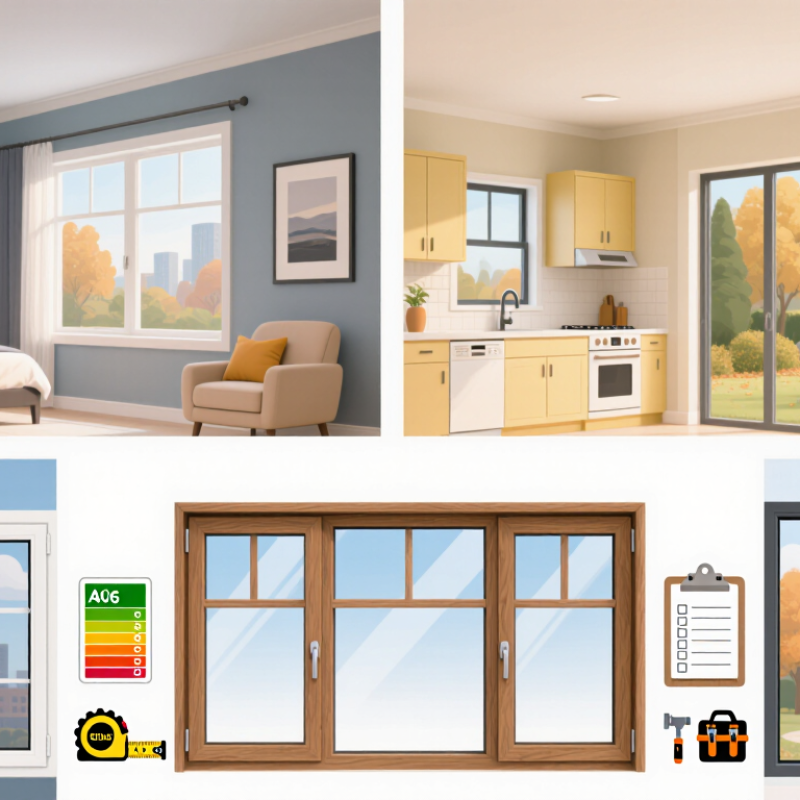
Identify Your Home’s Window Needs and Priorities
Begin by observing how each room behaves through a full day. Does a west-facing bedroom overheat in late afternoon? Do you feel a cold draft beside the kitchen window? Note condensation, outside noise, difficult-to-open sashes, and rooms that need frequent heating or cooling. Small details matter. The U.S. Department of Energy estimates that heat gain and loss through windows account for about 25–30% of residential heating and cooling energy use. That is a national estimate, not a promise of specific savings for your home; climate, installation, and existing insulation all affect results.
Set priorities before comparing products. If winter drafts are the main concern, look closely at U-factor, which indicates how readily a window transfers heat. For strong sunlight, compare solar heat gain coefficient (SHGC). The National Fenestration Rating Council provides standardized ratings for these measures, making different products easier to assess. Also consider frame maintenance, glass cleaning, ventilation, privacy, and the window’s direction. A quiet north-facing study may need different features from a sunny living room. It is easy to focus only on energy ratings. I’ve found that overlooking everyday use—like a stiff latch or a sill that is hard to reach—can leave homeowners disappointed, even when the specifications look excellent.
Compare York Window Styles and Frame Materials
Compare window styles against the room, not just the view. Double-hung windows let you open the top or bottom sash, which helps control airflow in bedrooms. Casement windows swing outward and can catch cross-breezes. Sliding windows suit wide openings, while fixed windows provide daylight without ventilation. Check the label.
Frame material changes comfort and upkeep. Vinyl frames need little maintenance, but quality and reinforcement vary. Fiberglass is stable through temperature changes and can be painted. Wood offers a warm interior finish, though it needs regular sealing or painting. Aluminum is slim and strong, but conducts heat unless it includes a thermal break. Touch samples in person. A finish that looks convincing online may feel wrong beside your trim.
Check the National Fenestration Rating Council label for U-factor and solar heat gain coefficient; lower U-factor generally means better insulation. The U.S. Department of Energy’s Energy Saver guidance estimates that windows account for 25–30% of residential heating and cooling energy use. That figure is a useful prompt, not a prediction for every home: climate, orientation, shading, and installation all matter. A north-facing room may need a different balance than a sunny west-facing one. Even the best-rated unit can disappoint if its frame is poorly fitted.
Evaluate Energy Ratings, Glass Options, and Climate Suitability
Window performance matters because glass can quietly drive comfort and energy costs. The U.S. Department of Energy’s Energy Saver guidance estimates that heat gain and loss through windows account for 25–30% of residential heating and cooling energy use. That figure is a useful warning, not a promise of equal savings from replacement windows. Air leaks, insulation, and installation quality also matter.
Tip: Compare the whole-window U-factor and solar heat gain coefficient (SHGC), not just the glass description. The National Fenestration Rating Council explains these ratings: lower U-factors indicate less heat transfer, while SHGC indicates how much solar heat enters. In cold, sunny regions, useful winter sun may help; in hot, bright climates, a lower SHGC can reduce unwanted heat. Shade and window direction change the picture.
Match the glazing to your local weather and the room’s use. Low-emissivity coatings and multiple panes can improve insulation, but extra layers may not suit every climate or budget. Ask for rated values, installation details, and condensation guidance in writing. Small details matter. A south-facing living-room window behaves differently from a shaded bedroom window. I would also check local seasonal conditions rather than rely on a generic “all-climate” claim; that shortcut can be misleading.
7 Tips for Choosing the Best Windows: Energy Ratings, Glass Options, and Climate Suitability
Maximum Qualifying U-Factor by Climate Zone
Lower U-factor means less heat transfer through the window. These are maximum qualifying U-factor limits for residential windows by climate zone—not ratings of individual products.
Choosing glass: Low-emissivity coatings and gas-filled insulated glass units can help reduce heat transfer. In colder climates, prioritize a low U-factor; in warmer, sunnier climates, compare solar heat gain coefficient (SHGC) as well. Consider window orientation and local climate, and check product ratings on an independent NFRC label.
Source: Residential window efficiency criteria, Version 7.0 (2023). Climate-zone limits shown are Northern 0.22, North-Central 0.25, South-Central 0.28, and Southern 0.32 Btu/(h·ft²·°F).
Assess Product Quality, Installation, and Total Cost
Tip 1: Check the whole window, not just its frame. Compare National Fenestration Rating Council labels for U-factor and solar heat gain coefficient. Lower U-factor generally means less heat loss; the best solar rating depends on your climate and window direction. Ask to see the actual product specifications, not just a showroom sample. It can look convincing.
Tip 2: Treat installation as part of the product. The U.S. Department of Energy advises careful installation to limit drafts and moisture problems. Ask who will measure and install each window, and request a written scope covering flashing, insulation, sealing, trim, and cleanup. Confirm how the installer will protect floors and manage gaps around the frame. Small details matter.
Tip 3: Compare total costs, not the per-window price. Get itemized quotes that include delivery, removal, repairs, finishing, and disposal. The 2024 Cost vs. Value report estimated a national average project cost of $21,264 for vinyl window replacement, with $14,270 in resale value—about 67.1% of the cost recouped. That figure is an estimate, not a guarantee; local labor, window sizes, and home condition can change the math. I would still leave room for surprises. Ask about warranty coverage and likely maintenance before deciding.
Review Warranties, Maintenance, and Installer Credentials
A window warranty is only useful when its limits are clear. Check whether it covers glass, frames, hardware, labor, and removal costs; these may have different terms. Ask how long coverage lasts and what maintenance could void it. Keep the warranty and installation paperwork together. Small detail, big difference.
Maintenance affects performance too. Look for cleaning instructions, drainage-channel checks, and guidance on lubricating locks and hinges. The U.S. Department of Energy estimates that heat gain and loss through windows account for 25–30% of residential heating and cooling energy use. ENERGY STAR’s window guidance also shows that savings depend on climate and product performance. A warranty cannot make a poorly matched window efficient. I would double-check the ratings before signing.
Installer credentials deserve the same scrutiny as product specifications. Ask for proof of relevant training, insurance, recent references, and a written scope covering flashing, sealing, and cleanup. Request the names of the people doing the work, not just the salesperson. The National Fenestration Rating Council label provides standardized ratings such as U-factor and solar heat gain coefficient; ask the installer to explain how those figures suit your home. If an answer is vague, pause. Even a polished quote can leave gaps.
7 Tips for Choosing the Best York Windows - Review Warranties, Maintenance, and Installer Credentials
| Tip | What to Check | Why It Matters | Practical Action |
|---|---|---|---|
| 1. Match the window to the room | Window style, opening direction, ventilation needs, and emergency-exit requirements where applicable. | Different styles provide different levels of airflow, access, and usable space. | List each room’s priorities and confirm applicable local building requirements before ordering. |
| 2. Compare energy performance | Whole-window U-factor, solar heat gain coefficient (SHGC), air leakage information, and relevant energy-label details. | These measures help compare heat transfer, solar heat gain, and air movement; the best values depend on climate and building needs. | Compare the same performance measures across quotes and check local energy guidance. |
| 3. Read the warranty carefully | Coverage period, covered parts, glass and seal terms, labor coverage, exclusions, and whether coverage transfers to a new owner. | Warranty terms vary, and installation or maintenance conditions may affect coverage. | Request the full written warranty and note who handles claims and any registration deadlines. |
| 4. Check maintenance requirements | Cleaning instructions, hardware lubrication guidance, drainage paths, and care requirements for frames and finishes. | Routine care can help keep moving parts and drainage features working as intended. | Ask for the care guide and confirm which cleaners or maintenance products should be avoided. |
| 5. Verify installer credentials | Required local licenses, insurance, relevant training, references, and experience with the proposed installation type. | Proper installation affects fit, operation, weather sealing, and access to some warranty protections. | Check credentials with the appropriate local authority and request recent, comparable references. |
| 6. Compare complete written quotes | Measurements, product specifications, removal and disposal, installation materials, finishing work, permits, and payment schedule. | A clear scope makes it easier to compare offers and identify items that may otherwise become extra costs. | Get itemized quotes and have any exclusions or proposed changes documented in writing. |
| 7. Confirm measurements and aftercare | Who takes final measurements, how existing conditions are handled, the installation schedule, cleanup, and post-installation support. | Accurate measurements and a documented handover help reduce avoidable delays and clarify responsibility. | Confirm final measurements before production and request written care, warranty, and service contact details. |
Related Posts
-
10 Essential Tips for Choosing Euro Doors and Windows for Your Home?
-
Why Choose the Best Doors and Windows for Your Home?
-
Top Benefits of Manufactured Windows for Your Home Upgrade?
-

2026 Best Premium Doors and Windows for Global Buyers?
-
What Are the Best Ready Made Windows in 2026?
-

Top York Windows Suppliers for Global Buyers