Why Choose Ready Made Windows for Your Global Project?
For a global construction project, every window choice affects time, performance, and long-term maintenance. Ready made windows offer a practical route when schedules, budgets, and quality expectations must align across different regions. They arrive with defined dimensions, tested components, and established production methods. That consistency can reduce site confusion.
Fenestration consultant Dr. Elena Marquez says, “A reliable window is not simply installed; it is planned, tested, and supported.” Her view reflects an important reality. Product selection should consider climate, glazing performance, frame materials, ventilation, and local installation skills. A window designed for a mild coastal city may perform poorly in a cold, windy mountain region. Details matter.
Ready made windows can shorten procurement cycles because manufacturers repeat proven designs. Factory-controlled production may also limit cutting errors, uneven seals, and unnecessary material waste. These advantages become valuable when projects span several countries. Replacement parts may be easier to identify, too.
But standardization is not perfection. It can become a weakness when opening sizes, building traditions, or weather conditions differ sharply. Careless specification may create condensation, poor insulation, or awkward fitting. That risk deserves attention.
A strong global plan combines factory consistency with local verification. Project teams should review technical documents, certifications, delivery protection, warranty coverage, and installation instructions. They should also inspect samples before ordering large quantities. A real frame, viewed under daylight, often reveals issues that drawings hide.
The best choice is not always the cheapest unit. It is the product that remains dependable after transport, installation, seasonal change, and years of use. That judgment takes experience, evidence, and a willingness to question convenient assumptions.
Definition and Scope of Ready-Made Windows
Why Choose Ready Made Windows for Your Global Project?
Definition and Scope of Ready-Made Windows
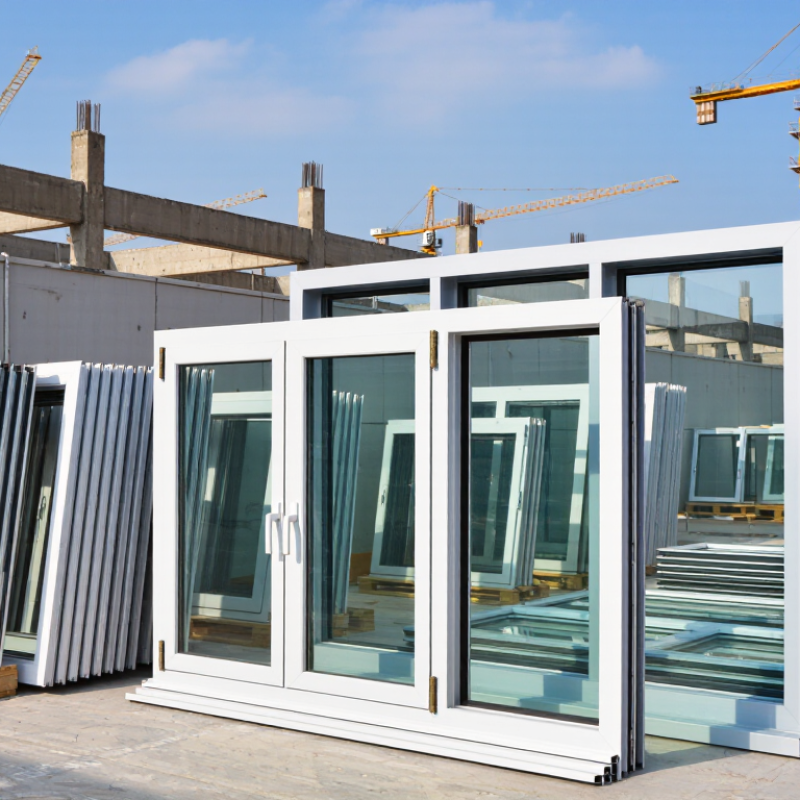
Ready-made windows are factory-produced units prepared for direct installation. They may include frames, glazing, seals, drainage paths, and operating hardware. Some models use fixed dimensions. Others allow controlled changes in size, glass type, color, or opening method.
Their scope covers housing, offices, schools, hotels, and industrial buildings. It also includes both new construction and replacement work. The useful distinction is not simply “standard” versus “custom.” It is the level of factory completion and design flexibility. A finished unit arriving with protective film, labeled hardware, and tested seals can reduce site work. That matters when projects cross climates, languages, and labor systems.
Performance must remain measurable. ISO 10077 methods evaluate thermal transmittance, while EN 12207 addresses air permeability. Local requirements may also cover wind pressure, water resistance, fire safety, acoustics, and impact protection. The International Energy Agency reports that buildings consume about 30% of global energy and produce around 26% of energy-related emissions. Window choices therefore affect more than appearance. Low-emissivity glazing, insulated frames, and correct installation can reduce heat loss, although poor fitting can cancel factory performance.
Industry forecasts commonly place the global windows market above 200 billion dollars this decade, but estimates differ by method. That difference deserves attention. A practical specification should record tested values, tolerances, packaging conditions, and replacement procedures. I have seen schedules fail because a “standard” window ignored local wall thickness. Ready-made does not mean universally ready.
Ready-made windows are standardized, factory-produced window units supplied in established sizes, glazing combinations, and frame configurations. Their scope typically includes the frame, glass or insulating glass unit, seals, hardware, and compatible installation details. The chart uses representative whole-window U-values commonly referenced in building-energy guidance: lower U-values indicate lower heat transfer and improved insulation. Final selection should be verified against local energy codes, climate conditions, dimensions, and project specifications.
Key Benefits for International Construction Projects
Why Choose Ready Made Windows for Your Global Project?
For international construction projects, factory-made windows offer more predictable quality than site-built units. Each frame follows controlled measurements, documented procedures, and repeated inspections. This consistency helps teams working across different countries and skill levels. It matters. A small opening error can create major installation delays. Pre-finished windows also reduce dust, cutting, and wet work inside the building.
Logistics become easier when units are labeled by floor, room, and elevation. Site crews can match delivery records with architectural drawings quickly. Factory glazing can improve thermal performance, weather resistance, and acoustic control. However, these benefits depend on correct specifications. Local climate, wind exposure, drainage design, and building codes must be checked before production. Requirements differ widely. A window suitable for a dry inland site may fail near a coastal environment without proper protection.
Ready-made systems can shorten installation time, especially on repetitive apartment or hotel projects. They may also reduce material waste and improve cost forecasting. Yet international shipping introduces risks, including damaged packaging, customs delays, and limited replacement options. Practical teams should approve samples, review test reports, and confirm spare-unit planning. No system is perfect. Factory precision cannot fix inaccurate drawings or poor site measurements. A careful survey, clear communication, and local technical review remain essential. That extra effort often prevents expensive corrections after the windows arrive.
Material, Design, and Performance Considerations
Why Choose Ready Made Windows for Your Global Project?
Material, design, and performance determine whether ready made windows succeed across different climates. The International Energy Agency reports that buildings consume about 30% of global final energy. Windows influence this demand through heat gain, heat loss, daylight, and ventilation. The U.S. Department of Energy estimates that windows can cause 25–30% of residential heating and cooling energy use. These figures make specification more than an aesthetic decision.
For hot regions, choose glazing with a suitable solar heat gain coefficient. For cold regions, prioritize low U-values and insulated frames. Low-emissivity coatings, inert gas filling, and warm-edge spacers can improve insulating performance. Aluminium frames need thermal breaks, while reinforced uPVC or timber systems require careful moisture detailing. Design matters too. Larger panes increase daylight, but they can raise solar loads and structural demands. Check air leakage, water resistance, wind pressure, and acoustic ratings under recognized testing procedures. A perfect catalogue value may perform poorly after careless installation.
Tips: Compare tested values, not marketing claims. Request climate-specific calculations. Review the installation method early. Confirm local dimensions and fire requirements. Inspect sample corners and gaskets.
The National Fenestration Rating Council explains that whole-window ratings better reflect real performance than centre-glass values. That distinction is often missed. I have seen attractive specifications fail because the frame and glass were evaluated separately. Ready made does not mean one-size-fits-all. A small tolerance can create drafts, condensation, or difficult maintenance. I still allow a design margin, because site conditions rarely behave perfectly.
Why Choose Ready Made Windows for Your Global Project? - Material, Design, and Performance Considerations
| Evaluation Dimension | Ready-Made Window Consideration | Typical Technical Data | Global Project Benefit |
|---|---|---|---|
| Frame Material | Aluminium frames provide high dimensional stability and slim sightlines; uPVC frames offer strong thermal insulation and low maintenance. | Thermally broken aluminium can substantially reduce heat transfer compared with non-thermal-break aluminium. Multi-chamber uPVC profiles are commonly used for residential thermal performance. | Standardized material systems simplify procurement, installation training, and replacement planning across multiple locations. |
| Glazing Options | Double glazing is suitable for many temperate climates, while triple glazing is better suited to very cold environments or projects with demanding energy targets. | Typical insulating glass units use two or three panes separated by sealed cavities. Low-emissivity coatings reduce radiant heat transfer; gas-filled cavities can further improve insulation. | Predefined glazing configurations reduce design changes and help maintain consistent energy performance between project phases. |
| Thermal Performance | Select a complete window system according to the required whole-window U-value rather than evaluating the glass alone. | Lower U-values indicate better heat insulation. High-performance residential windows commonly target whole-window U-values around 0.8–1.6 W/m²·K, depending on frame, glazing, size, and local standards. | Improved thermal performance can help reduce heating and cooling loads and support compliance with regional building requirements. |
| Air Permeability | Factory-assembled sashes, gaskets, and hardware provide more consistent sealing than individually improvised site assemblies. | Air leakage is commonly assessed using standardized pressure tests. Higher air-tightness classifications indicate less uncontrolled air movement through the closed window. | Consistent air-tightness improves occupant comfort and helps protect energy calculations from installation variability. |
| Water Tightness | Choose tested drainage paths, compression seals, and sill details appropriate for the local rainfall and wind exposure. | Water-resistance ratings are determined through laboratory testing under controlled air-pressure and water-spray conditions; higher ratings generally indicate better resistance. | Pre-tested assemblies reduce the risk of moisture entry, interior damage, and remedial work in different climate zones. |
| Wind Load Resistance | Window size, frame reinforcement, glass thickness, fixing method, and building height must be checked against the project wind-load calculation. | Required design pressure varies with wind speed, terrain, building height, exposure category, and local code requirements. | Using an established system with documented test results can shorten engineering review and reduce uncertainty during approval. |
| Acoustic Control | Laminated acoustic glass and asymmetric pane thicknesses can improve sound reduction where traffic or urban noise is significant. | Sound insulation is expressed as a weighted rating in decibels. The final result depends on glass, frame, seals, installation, and surrounding wall construction. | Predefined acoustic options allow project teams to match window specifications with location-specific noise requirements. |
| Solar Heat and Daylight | The glass selection should balance visible light transmission with solar heat gain control, especially in hot or highly glazed buildings. | Visible transmittance describes daylight transmission; solar heat gain coefficient describes the fraction of incident solar energy entering through the window. Lower values generally reduce solar heat gain. | A consistent glazing package supports daylight planning while limiting overheating and cooling demand. |
| Design Flexibility | Common configurations include fixed, casement, tilt-and-turn, sliding, awning, and hopper windows, subject to the selected system. | Standard module sizes, hardware positions, colors, and glazing combinations can be selected from an established product range. | A controlled design range enables visual consistency across regions without requiring a completely new engineering process for every opening. |
| Installation and Logistics | Finished units can arrive with glazing, hardware, gaskets, and protective packaging already coordinated, subject to the supply specification. | Installation still requires accurate opening dimensions, correct shimming, compatible sealants, drainage clearance, and protection from site damage. | Standardized installation details can reduce on-site fabrication, simplify scheduling, and improve quality control across international teams. |
| Maintenance and Service Life | Durable finishes, replaceable seals, accessible hardware, and documented cleaning procedures should be reviewed before approval. | Expected service life depends on material quality, coating, exposure, installation, cleaning frequency, hardware use, and climate. Regular inspection of seals, drainage holes, and fasteners is recommended. | A repeatable maintenance schedule supports predictable operating costs and easier replacement of compatible components. |
Global Standards, Shipping, and Installation Requirements
Ready-made windows can simplify global projects, but standardization must begin before production. Every opening needs a verified survey, metric dimensions, design wind pressure, glass specification, and local performance targets. Small errors become expensive at a port. ISO 12567-1 provides a recognized method for measuring window thermal transmittance. That matters because the International Energy Agency reports that buildings consume about 30% of global final energy. Energy performance is not a decorative feature.
Shipping demands equal discipline. UNCTAD’s Review of Maritime Transport 2023 states that over 80% of world trade by volume moves by sea. Windows should travel in braced, moisture-protected crates, with corner guards and readable packing lists. Each crate should identify elevation, unit number, weight, glass type, and handling direction. Export documents must match the purchase order and destination customs rules. A missing certificate can delay an otherwise complete shipment. That risk is often underestimated.
Installation is where factory accuracy meets local workmanship. EN 14351-1 covers performance characteristics for windows and external pedestrian doors in applicable European contexts. ASTM E2112 offers installation guidance for exterior windows and doors in other project environments. Teams still need site-specific checks for sill drainage, sealant compatibility, anchors, insulation, and movement joints. Mock-up testing can expose leakage before hundreds of units are fitted. Field records should include photos, batch numbers, torque checks, and water-test results. Perfection is unlikely. A controlled process is realistic.
Cost, Maintenance, and Supplier Evaluation Criteria
Ready-made windows can control cost when global projects use standard sizes and repeatable specifications. Yet the cheapest quotation is rarely the lowest project cost. The U.S. Department of Energy reports that windows can cause 25–30% of residential heating and cooling energy use. Poor glass selection can therefore create higher operating expenses for decades. Climate, orientation, shading, and local energy prices deserve review before approval.
Maintenance needs equal attention. Procurement teams should request tested air leakage, water penetration, thermal performance, hardware cycles, spare-part availability, and installation instructions. ISO 15686-1 supports service-life planning, but predicted life is not guaranteed. Salt air, dust, ultraviolet exposure, and untrained installers can shorten it. Small details matter. A missing gasket can become a recurring complaint. Ready-made units may simplify replacement, although unusual openings can erase that advantage.
Supplier evaluation should combine technical evidence with delivery reliability. Check accredited laboratory reports, quality-control records, factory capacity, packaging methods, and after-sales response times. The International Energy Agency’s 2023 buildings report states that buildings account for about 30% of global final energy consumption and 26% of energy-related emissions. Window performance is not a decorative issue. Compare suppliers using weighted scores for lifecycle cost, compliance, maintenance access, and logistics, rather than price alone. I would also keep a contingency allowance; standard products still face port delays, damaged pallets, and specification changes. That part is often underestimated.
Related Posts
-
How to Choose European Tilt and Turn Windows for Your Home?
-

How to Find Better Doors and Windows from China?
-
Why You Should Choose the Best Patio Doors and Windows for Your Home
-
How to Choose the Right York Windows for Your Home?
-
How to Ensure Your Windows Are Safe: Top Tips and Best Practices
-

How to Clean Front Windows for a Crystal Clear View?