Why Polish Windows Are a Smart Choice for Global Buyers?
For global buyers, polish windows offer a practical balance of quality, design, and cost. Poland has a strong manufacturing tradition, supported by modern factories and skilled production teams. Many manufacturers use automated cutting, welding, glazing, and quality-control systems. This consistency matters when projects include dozens of identical units. A well-made window should close smoothly, reduce drafts, and remain stable through seasonal changes. Buyers can also find PVC, timber, aluminium, and mixed-material options. Each material suits different buildings and maintenance expectations.
However, a smart choice requires more than attractive catalog photos. Product performance depends on verified specifications, proper installation, and suitable glass selection. Ask for thermal data, air-permeability results, water-tightness ratings, and warranty terms. Check whether the supplier can provide technical drawings and installation guidance in English. Local climate should influence the decision. A triple-glazed unit may benefit a cold region, while solar-control glass may suit a warmer façade. Dimensions must be confirmed carefully, especially for renovation projects with uneven openings. Small errors become expensive quickly.
Price is important, but it should not be the only argument. A low quotation proves little. Reliable suppliers explain lead times, packaging, transport protection, and after-sales support. Experience shows that communication can matter as much as manufacturing quality. Still, not every Polish factory offers the same standards. Buyers should compare independent documentation and request project references. That extra step may feel slow. It often prevents disappointment. This guide examines why polish windows attract international attention, while also considering their limitations and the practical checks responsible buyers should complete.
What Are Polish Windows and How Are They Made?
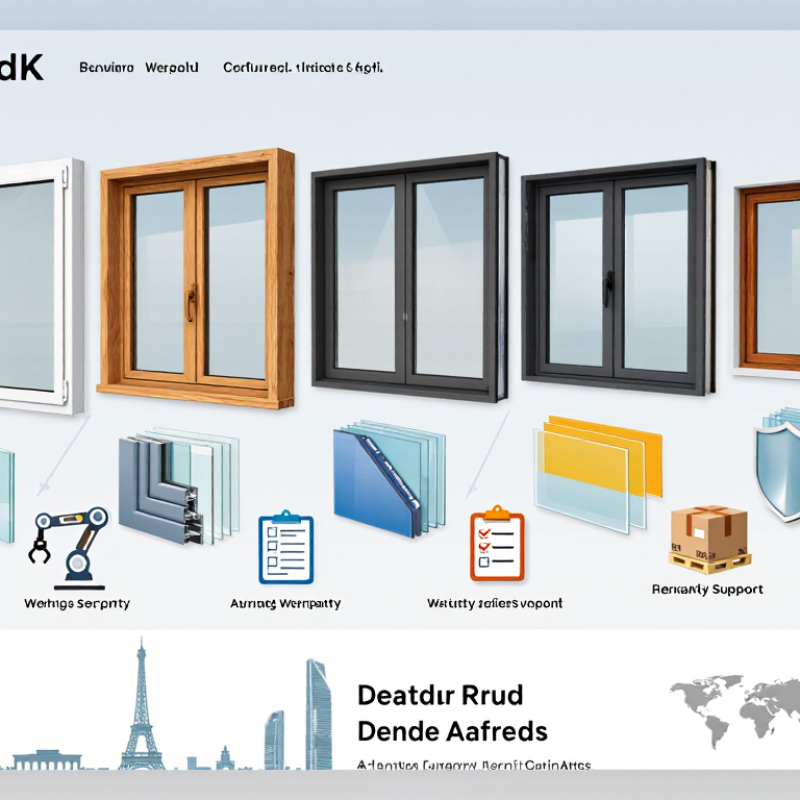
Polish windows are window systems manufactured in Poland, not a single architectural style. They commonly use uPVC, timber, or aluminium frames. Each material serves a different building need. uPVC offers low maintenance and reliable insulation. Timber brings a warmer, more natural appearance. Aluminium supports slim profiles and larger glazing areas.
Production begins with precise frame cutting and computer-controlled machining. uPVC sections may receive steel reinforcement before welding. Timber frames are kiln-dried, laminated, sanded, and treated against moisture. Aluminium sections are cut, assembled, and finished with durable coatings. Workers then install insulated glass units, seals, handles, and locking hardware. The glass may include two or three panes, depending on thermal requirements. Factory teams check dimensions, corner joints, drainage paths, and opening forces. Testing can also measure air permeability, water resistance, and wind performance under recognized European standards.
The process is controlled, but not magical. A small alignment error can affect smooth operation. Careful inspection still matters. Buyers should request performance data, installation guidance, and material specifications before ordering. A practical check includes frame thickness, glass composition, spacer type, and hardware quality. Polish manufacturers often combine automated production with skilled finishing, which helps maintain consistency across large orders. Yet quality may vary between factories, even when products look similar. That detail deserves attention. Reliable purchasing depends on documented testing, clear tolerances, and honest communication about climate, transport, and installation conditions.
Why Polish Windows Are a Smart Choice for Global Buyers
Polish windows are commonly manufactured with multi-chamber PVC, timber, or thermally improved aluminium frames combined with insulated glazing units. Their thermal performance is measured by the Uw value, expressed in W/m²K; a lower value indicates better insulation.
The chart shows the maximum permitted U-values under Poland’s WT2021 technical requirements for selected vertical and roof-window applications. These benchmarks encourage efficient frames, low-emissivity glazing, inert-gas-filled cavities, warm-edge spacers, and accurate multi-stage manufacturing and quality control.
Reference: Polish Technical Conditions for Buildings and Their Location (WT2021), thermal-transmittance requirements in force for new construction.
Which Materials and Technologies Define Polish Windows?
Polish windows are valued by global buyers because their materials balance durability, insulation, and practical design. uPVC frames suit apartments and family homes, offering stable performance with limited maintenance. Timber frames add warmth and a natural surface, but they need regular coating inspections. Aluminum frames provide slim profiles and strength for large glazed areas. Each material solves a different problem.
Modern Polish window technology often combines low-emissivity glass, argon-filled chambers, and warm-edge spacers. This structure can reduce heat transfer around the glass perimeter. Multi-point locking systems improve sealing and security when properly adjusted. Tilt-and-turn hardware also supports controlled ventilation, especially in bedrooms and kitchens. In real installations, small fitting errors can reduce these benefits. A premium specification cannot repair poor installation.
Tips: Check the whole window system, not only the frame. Ask for thermal transmittance values, glass composition, air-tightness results, and installation guidance. Compare certified test data under the same standards. Measure wall conditions carefully before ordering. Coastal buyers should request corrosion-resistant hardware. Large windows may need reinforced profiles, but stronger components can increase weight and cost. That trade-off deserves honest discussion. Also inspect drainage paths and gasket quality; overlooked details often cause practical problems years later.
Why Do Polish Windows Perform Well in Diverse Climates?
Polish windows are designed for conditions that change sharply across regions. Their performance reflects Poland’s cold winters, wet autumns, strong winds, and increasingly hot summers. This makes them practical for buyers in varied climates.
Manufacturers commonly combine insulated frames with double or triple glazing. Multiple seals help reduce drafts when temperatures fall below freezing. Warm-edge spacers can also limit condensation around the glass. During hot weather, low-emissivity coatings and solar-control glass help reduce indoor heat. The right choice depends on orientation, local weather, and building design.
Details matter. Frame depth, drainage channels, and hardware quality affect long-term performance. A well-tested window can still perform poorly if installation leaves gaps around the frame. Fit matters. Professional installers should use suitable tapes, insulation, and secure fixing points. On-site measurements are essential, especially for older walls that are rarely perfectly straight.
Buyers should request thermal data, air-tightness results, water-resistance ratings, and wind-load information. These documents offer stronger evidence than attractive product photos. They should also check whether the specification suits the actual project, not just a laboratory test. No window is magic. A highly insulated frame may still create condensation if indoor ventilation is weak. Maintenance is another overlooked issue; seals and moving parts need occasional inspection. Careful selection, accurate installation, and realistic expectations allow Polish windows to perform reliably across diverse climates.
Why Polish Windows Are a Smart Choice for Global Buyers? — Why Do Polish Windows Perform Well in Diverse Climates?
| Climate or Buying Condition | Main Performance Challenge | Suitable Window Configuration | Relevant Technical Benchmark | Why It Can Work Well |
|---|---|---|---|---|
| Cold and continental climates Long winters and large indoor–outdoor temperature differences |
Heat loss, interior condensation and cold surface temperatures | Triple glazing, low-emissivity coatings, insulated frames, warm-edge spacers and correctly sealed installation joints | A whole-window thermal transmittance of Uw ≤ 0.90 W/m²K is a commonly used high-efficiency benchmark for vertical windows in Poland’s current building regulations | Lower Uw values indicate reduced heat transfer through the complete window, helping improve winter comfort and energy efficiency |
| Hot and sunny climates High solar radiation and cooling demand |
Solar heat gain, glare and increased air-conditioning loads | Solar-control glazing selected by façade orientation, external shading, ventilated installation details and low-air-leakage frames | The solar factor g should be selected for the project; lower g-values generally reduce transmitted solar heat, while higher values can be useful in cooler exposures | The same window platform can be configured differently for north-, south-, east- and west-facing elevations rather than using one specification everywhere |
| Humid and rainy climates Frequent precipitation and persistent moisture |
Water penetration, moisture damage and reduced durability if drainage is inadequate | Multi-level gaskets, pressure-equalised drainage paths, corrosion-resistant hardware and a sill system with properly directed drainage | Water-tightness is classified under EN 12208; higher classes provide greater resistance under laboratory test pressure, but the required class depends on exposure and building height | Modern European window systems are tested for controlled water resistance and can be specified according to local rainfall and wind exposure |
| Coastal environments Wind-driven rain, salt-laden air and strong gusts |
Higher wind pressure, accelerated corrosion and water leakage | Wind-load calculation, reinforced profiles where required, suitable surface protection, stainless or corrosion-resistant hardware and carefully detailed flashing | Wind resistance is classified under EN 12210; the appropriate class must be selected using location, building height, terrain and window size | European classification systems allow buyers and designers to match the window’s tested wind and water performance to the actual site conditions |
| Urban and high-traffic locations Road, rail, construction and neighbourhood noise |
Outdoor noise transmission and possible loss of acoustic comfort | Asymmetric laminated acoustic glazing, well-sealed opening lights, tight installation joints and minimized frame gaps | Sound insulation is commonly reported as Rw in decibels under EN 14351-1 testing; the required value depends on the measured outdoor noise level | Glazing thickness, air spaces, laminated layers and airtight installation can be combined to target different acoustic requirements |
| Mixed and seasonally changing climates Cold winters, warm summers and rapid weather changes |
The need to balance insulation, ventilation, solar gain and moisture control throughout the year | Low-U glazing, adjustable solar-control options, durable seals, controlled background ventilation and installation adapted to the wall system | Air permeability is classified under EN 12207; Class 4 is the highest standard classification and indicates the lowest tested air leakage among the listed classes | A broad range of tested configurations makes it possible to balance winter insulation, summer comfort and airtightness for different regions |
| International renovation projects Replacement windows installed in existing buildings |
Irregular openings, thermal bridges, poor substrates and compatibility with existing walls | Made-to-measure frames, surveyed opening dimensions, insulated perimeter connections and installation tapes or membranes suited to the wall construction | Final performance depends on both the declared window values and the installation quality; EN 14351-1 covers relevant characteristics for external pedestrian doorsets and windows | Custom sizing and configuration flexibility can simplify adaptation to different masonry systems, renovation depths and local construction practices |
Note: The values shown are technical benchmarks or classification principles, not guarantees for every window made in Poland. Actual performance depends on the complete window configuration, dimensions, glazing, hardware, exposure, building design and installation quality. Key references include EN 12207 for air permeability, EN 12208 for water tightness, EN 12210 for wind resistance and EN 14351-1 for relevant window product characteristics.
How Do Polish Windows Compare in Quality, Cost, and Design?
Why Polish Windows Are a Smart Choice for Global Buyers?
Polish windows compete strongly on quality, cost, and design. Many suppliers build units under EN 14351-1 and provide declared Uw, air-permeability, and water-tightness values. Premium systems often reach Uw around 0.7–0.9 W/m²K, especially with triple glazing and warm-edge spacers. The Passive House Institute’s certified component data shows that this performance range can support very low-energy buildings. Certification still matters more than marketing claims.
Cost is another practical advantage. Eurostat’s 2024 comparative price-level data placed Poland’s household consumption prices at roughly 72% of the European Union average. This does not measure windows directly, but it helps explain competitive manufacturing and installation costs. The U.S. Department of Energy reports that windows can influence about 25–30% of residential heating and cooling energy use. A lower purchase price means little if the frame leaks air or the glass performs poorly.
Design flexibility is equally important. Polish factories commonly produce inward-opening, lift-and-slide, roof, and oversized terrace units. Buyers can request narrow sightlines, timber-aluminium finishes, acoustic glazing, and concealed hardware. Detailed drawings reduce mistakes. My caution is simple: impressive specifications may not match local weather, installation skills, or shading conditions. A window rated well in a laboratory can perform badly beside an uneven opening. Compare complete quotations, including transport, flashing, fitting, and after-sales support. That part is often underestimated.
What Should Global Buyers Check Before Choosing Polish Windows?
Before choosing Polish windows, global buyers should verify performance, not only appearance or price. The European Commission reports that buildings consume about 40% of the European Union’s energy. Window specifications therefore deserve close attention. Ask for the Uw value, solar factor, air-permeability class, water-tightness, and wind-load results. These tests should follow EN 14351-1 or an equivalent local standard.
Check the complete product file. It should include a Declaration of Performance, test laboratory details, installation instructions, and warranty conditions. A lower Uw value usually means better insulation, but the frame, glass spacer, and installation method also matter. Poor fitting can create cold edges around a carefully tested window. That detail is often underestimated.
Climate changes the decision. In a cold northern project, triple glazing may reduce heat loss. In a hot coastal area, excessive solar gain can increase cooling costs. Look for acoustic results in decibels when traffic noise matters. Check drainage paths, gasket quality, hardware corrosion resistance, and replacement-part availability. European construction data commonly links better building envelopes with lower operational energy demand, but real results depend on workmanship. I have seen impressive specifications fail because installers ignored the sill slope and sealing tape. Paperwork is useful. Site control is better. A spreadsheet cannot detect a leaking corner after heavy rain.
Related Posts
-
2026 Best Premium Windows for Global Buyers?
-
2026 Best Front Windows for Your Global Sourcing Needs?
-
Top 10 Tips for Choosing the Best Windows in Oklahoma
-
2026 Best Manufactured Windows for Global Buyers?
-

The Evolution of Front Windows: How Modern Designs Enhance Energy Efficiency and Style
-
Why Choose the Best Doors and Windows for Your Home?