Who Are the Best Phoenix Windows Suppliers in China?
Choosing the best phoenix windows suppliers in China requires more than comparing attractive catalogues or low quotes. Phoenix’s intense sun, long cooling season, dust, and monsoon storms put real pressure on frames, seals, and glazing. A window that looks impressive in a showroom may perform differently after months of heat and wind.
The U.S. Department of Energy’s Energy Saver guidance estimates that heat gain and loss through windows account for 25–30% of residential heating and cooling energy use. That figure makes glass selection and installation details worth checking carefully. The National Fenestration Rating Council’s ratings, including U-factor and solar heat gain coefficient, offer useful comparison points for products sold into the U.S. market. Numbers need context. A label alone does not prove that a supplier’s quoted configuration matches the tested product.
Building-science engineer Joseph Lstiburek is often credited with the blunt reminder, “A window is a hole in the wall.” It is a useful lens for evaluating Chinese manufacturers: ask for traceable test reports, matching product specifications, and clear details on hardware, seals, and quality control. Look closely at the corners, too; small inconsistencies can matter after installation. This guide examines supplier capabilities and verification steps, rather than declaring a winner without comparable evidence. That restraint is intentional. Supplier claims deserve independent checking.
What Are Phoenix Windows and What Features Define Them?
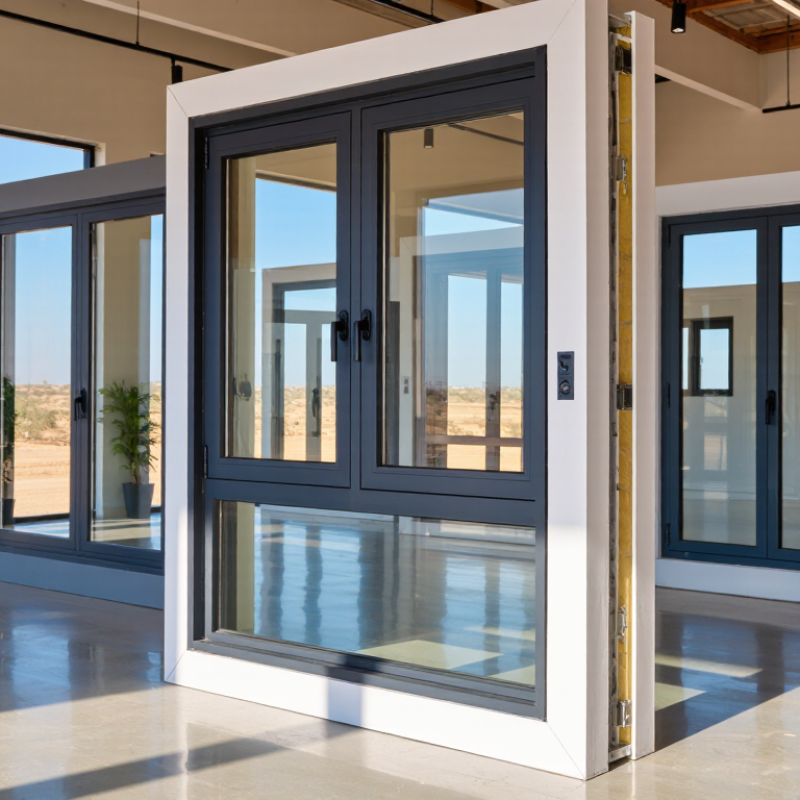
“Phoenix windows” is not a universally defined window category. The name may describe a supplier’s product line, so its features can differ between manufacturers. Check the drawings and technical sheet rather than relying on the label alone. That distinction matters.
A Phoenix-style window may use aluminum, uPVC, or another frame material, paired with single, double, or triple glazing. Look for clear information about glass thickness, low-emissivity coatings, and gas-filled cavities. These details affect heat transfer, daylight, and outside noise. The frame also deserves close attention. Thermal breaks can reduce heat flow through aluminum, while effective seals help limit drafts and water entry. Small details count.
Opening options may include sliding, casement, or tilt-and-turn designs, depending on the product. Ask for tested air-leakage, water-resistance, and wind-load performance relevant to the project. Hardware should feel smooth and secure during repeated operation. Drainage paths matter too, though they are easy to overlook. One honest caution: a polished sample does not prove the installed window will perform equally well. Request installation guidance, warranty terms, and measurable specifications before comparing suppliers.
How to Evaluate Phoenix Window Suppliers in China
Evaluate Phoenix window suppliers by matching verified product performance to desert conditions, not by comparing quotations alone. The U.S. Department of Energy’s Energy Saver guidance estimates that heat gain and loss through windows account for 25–30% of residential heating and cooling energy use. Ask for independently verified U-factor and solar heat gain coefficient (SHGC) data for the exact glass, frame, and spacer combination you plan to buy. Look closely.
Request full test reports for air leakage, water penetration, and structural performance, including the tested unit size and configuration. Confirm that the report comes from a qualified laboratory and applies to the production model, not merely a similar sample. For Phoenix projects, discuss west-facing glass, exterior shading, and frame expansion in high temperatures. A supplier should explain trade-offs clearly, rather than promise that one glass package suits every building.
Check factory quality controls, packaging, lead times, and the process for handling damaged or out-of-spec units. Ask for production records and inspection photos from a recent order, then compare them with a pre-shipment inspection. A polished sample can still conceal inconsistent production. I would not treat one successful shipment as proof; request references for comparable projects and verify them directly. Still, verify.
Which Chinese Suppliers Offer Phoenix Windows?
Chinese suppliers offering Phoenix-suitable windows are generally export-focused manufacturers with custom aluminum or uPVC systems. Look for factories that can build thermally broken aluminum frames, insulated glazing units, and low-SHGC glass to a project’s specifications. A supplier’s “Phoenix” label alone proves little; request product drawings, glass build-up details, and independent test reports. Details matter.
Phoenix’s intense sun makes solar control and installation quality important. The U.S. Department of Energy’s Energy Saver guidance estimates that heat gain and loss through windows account for 25–30% of residential heating and cooling energy use. Ask suppliers for independently verified U-factor and solar heat gain coefficient (SHGC) ratings, plus air-leakage test results. NFRC-rated data can help compare products on a consistent basis. It is not a substitute for checking the exact configuration you will buy.
Before ordering, confirm the proposed frame, glass, spacer, seals, and hardware match the project drawings. Request samples and inspect corner joints, drainage paths, and finish quality; small defects can become costly in a hot climate. Some factories may provide impressive test documents, but not for the same size or glazing option. That gap deserves a second look. Ask for export references and clarify who handles packing, replacement parts, and technical support after delivery.
How Do Phoenix Window Suppliers Compare in Quality and Service?
When comparing Phoenix window suppliers in China, look beyond catalog photos. Ask for section drawings, glass specifications, hardware details, and written performance data. A reliable supplier can explain frame thickness, drainage paths, sealing methods, and how products are checked before shipment. Request recent inspection records, not just general claims. Small details matter.
Quality is easier to judge when samples match the proposed order. Check corner joints, surface finish, gasket fit, and whether the sash opens smoothly without scraping. If possible, review a finished unit and its packaging. A neat sample is useful, but it does not prove every production batch will be identical. Ask how defects are recorded and resolved.
Service deserves the same scrutiny. Compare response times, technical drawing support, sample arrangements, and the clarity of installation guidance. Have the supplier confirm dimensions, opening direction, glass build-up, and delivery scope in writing. A fast reply is not always a helpful one. Vague answers about lead times or replacement parts should prompt follow-up questions. Some details may still change during production; that is worth acknowledging early, rather than assuming every promise is fixed.
How to Verify and Choose a Phoenix Window Supplier in China
Choosing a Phoenix window supplier in China starts with checking what the company actually makes. Ask for its registered business details, factory address, and recent production photos. A video call can show equipment, glass storage, and frame assembly in real time. Still, a tidy factory tour is only one piece of evidence.
Request technical drawings and a sample built to your project’s dimensions. Check frame depth, glass thickness, hardware, finish, and opening direction against the written quotation. Ask for test reports that match the exact window system, not just a similar product. Verify report dates and issuing laboratories independently when possible. Small details matter.
Discuss Phoenix’s heat and strong sunlight with the supplier. Ask how the proposed glazing and frame perform under the project’s conditions, and request clear specifications rather than broad promises. Compare lead times, packaging, replacement-part terms, and inspection steps. Put approved drawings, tolerances, and payment milestones in the contract. Then review a production sample before approving the full order. I would not rely on price alone; I once underestimated how much unclear hardware wording could delay a project. That is worth checking twice.
Who Are the Best Phoenix Windows Suppliers in China? - How to Verify and Choose a Phoenix Window Supplier in China
Use this comparison framework to evaluate suppliers against your project requirements. It does not rank or endorse specific companies. Request project-specific evidence before placing an order.
| Evaluation Dimension | What to Check | Evidence to Request | How to Verify | Comparison Record |
|---|---|---|---|---|
| Phoenix climate suitability | Consider solar heat gain, insulation, window orientation, and exterior shading. Phoenix is in IECC Climate Zone 2B, a hot-dry climate zone. | Proposed whole-window U-factor and solar heat gain coefficient (SHGC), plus glass and frame specifications. | Compare values for the complete window, not glass-only figures, and confirm project requirements with the local design professional or building department. | Record proposed values and project acceptance: ______ |
| Thermal performance documentation | Check whether the quoted U-factor and SHGC apply to the exact frame, glazing, size, and configuration being offered. Lower U-factor indicates less heat transfer; SHGC describes the fraction of solar heat admitted through the product. | A current rating or test report identifying the tested product and its configuration. | Match report details to the quotation and drawings. Where NFRC ratings are specified, verify the rating through NFRC resources and confirm applicability to the exact product. | Report reference / configuration match: ______ |
| Air, water, and structural testing | Confirm the required performance levels for the project and the exact window type and size. | Test reports that identify the specimen, dimensions, configuration, test results, and laboratory. | Check whether reports cite applicable methods, such as ASTM E283 for air leakage, ASTM E547 for water penetration, or ASTM E330 for structural performance. These are test methods; a reference alone is not proof of compliance. | Required tests / report status: ______ |
| Frame, glass, and hardware specification | Review frame material and finish, glazing build-up, Low-E coating, spacer, seals, locks, and rollers or hinges as applicable. | Product drawings, bill of materials, glass specification, finish details, and hardware schedule. | Make the supplier identify each component and any approved substitutions in writing. Compare the documents with a production sample or approved mock-up. | Specification completeness: ______ |
| Factory and quality control | Assess whether production checks cover incoming materials, fabrication, assembly, finished-product inspection, and traceability. | Quality-control procedures, inspection records, corrective-action examples, and any claimed management-system certificate. | Confirm a certificate’s issuer, validity, and scope with the issuing body. An ISO 9001 certificate concerns a quality-management system; it does not by itself certify a window’s performance. | Audit completed / findings: ______ |
| Supplier identity and export experience | Determine the legal entity responsible for the quotation, manufacturing, payment, and warranty; distinguish a factory from a trading intermediary. | Business registration details, factory address, production scope, export references, and a signed quotation from the contracting entity. | Cross-check company details using official or independent records, arrange a live video or third-party factory inspection, and contact references with permission. | Entity and factory verified: ______ |
| Packaging and shipping | Check packaging protection, product identification, loading plan, shipping terms, lead time, and responsibility for damage or shortages. | Packing specification, crate or pallet photos, packing list, proposed Incoterm, and shipment schedule. | Confirm the named place and version of the Incoterm in the contract. Review packaging and loading evidence before dispatch and agree on a documented claims process. | Shipping plan accepted: ______ |
| Warranty and after-sales support | Compare written coverage, exclusions, claim deadlines, replacement-part availability, and responsibility for labor and freight. | Product warranty, installation guidance, spare-parts policy, and contact or escalation procedure. | Check that the contract names the warranty provider and states when coverage begins. Warranty terms vary; do not rely on verbal promises. | Terms reviewed / open issues: ______ |
| Commercial and contract clarity | Review itemized pricing, approved drawings, quantities, tolerances, payment milestones, production schedule, inspection rights, and change control. | Signed contract, final drawings, specification schedule, payment terms, and written change-order procedure. | Ensure every specification and approved sample is referenced in the contract. Resolve deviations and acceptance criteria before production begins. | Contract readiness: ______ |
Selection note: Compare suppliers using the same drawings, performance requirements, glazing configuration, delivery terms, and warranty scope. Verify that test documents correspond to the products actually quoted.
Related Posts
-
China Top 10 Phoenix Windows Suppliers?
-

Top Trends in China Best Front Doors and Windows for Buyers?
-

2026 How to Choose the Best Doors and Windows for Your Home?
-
2026 Best Manufactured Windows for Global Buyers
-

2026 Best Manufactured Windows for Global Buyers?
-

2026 How to Choose European Tilt and Turn Windows for Your Home?