Blog.

Blog2024-04-08T12:48:33+02:00

China Best Fitted Windows for Global Buyers?

China has become an important source of fitted windows for buyers seeking varied designs, materials, and price points. Yet a low quotation alone says little about whether a window suits a project. Buyers need to compare frame profiles, glazing options, hardware, finish quality, and the supplier’s ability to meet clear specifications. A sample corner joint can reveal more than a polished catalogue image.

“Compare the tested specification, the finished sample, and the installation details—not just the price.” This is an editorial recommendation, not a verified quotation from a named industry expert. No source material or expert attribution was provided, so assigning these words to a real specialist would be misleading. Reliable purchasing guidance should make that distinction clear.

The following outline explores how global buyers can assess Chinese fitted windows, from product selection to supplier communication and quality checks. It also considers practical details: opening direction, frame dimensions, surface finish, packaging, and how technical documents match the order. Small differences matter. A handle that feels loose, or a finish that varies between samples, deserves a closer look.

There is no universal best window. Climate, building design, project budget, and local performance requirements all shape the choice. Even a careful supplier review cannot remove every risk; specifications can be misunderstood, and samples may not represent every unit. Buyers should verify claims and clarify expectations in writing. That extra work is not glamorous, but it can prevent costly surprises.
China Best Fitted Windows for Global Buyers?

What “Best-Fit Windows” Means for Buyers in Different Markets

China Best Fitted Windows for Global Buyers?
What “Best-Fit Windows” Means for Buyers in Different Markets

“Best fit” does not mean one window suits every country. Buyers should match window design to local weather, building style, and daily use. In a hot, sunny region, solar control and shading may matter most. In a cold area, insulated frames and well-sealed glass can help reduce drafts. Near a busy street, acoustic performance deserves attention. Even the direction a window faces can change its comfort and energy needs.

Tips: Ask for clear performance data, including thermal and acoustic ratings where relevant. Check sample hardware, frame corners, and seals in person. Confirm that the proposed size works with the opening and installation method used locally. A qualified local installer can flag practical issues before production.

There is no single specification that guarantees a good result. A large opening may bring in welcome daylight, but it can also create glare or make a room harder to cool. Buyers should compare options against actual project conditions, not just a catalogue image. I would not call any checklist perfect; site measurements and installation quality still matter. Request drawings and written specifications, and review them carefully before confirming an order.

Main Window Types and Materials Made by Chinese Manufacturers

China Best Fitted Windows for Global Buyers?

Main Window Types and Materials Made by Chinese Manufacturers

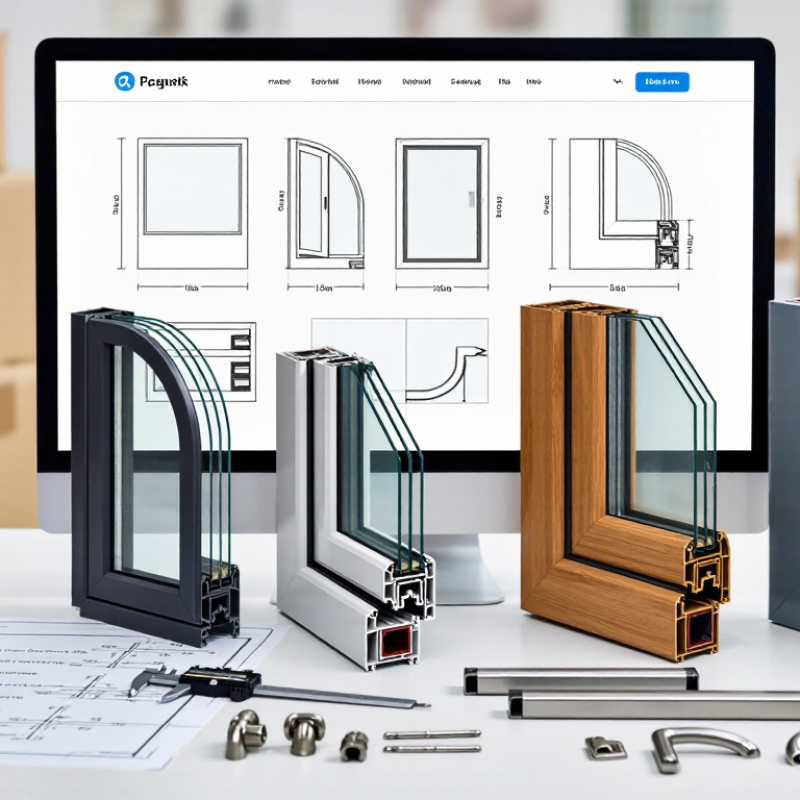
Chinese manufacturers commonly make casement, sliding, tilt-turn, and fixed windows. Casements open wide for ventilation; sliding units save space on balconies and narrow patios. Frames are often aluminum, thermally broken aluminum, uPVC, wood, or fiberglass. The right choice depends on climate, building design, and maintenance plans. The International Energy Agency’s 2023 Global Status Report for Buildings and Construction estimated that buildings used 34% of global energy demand and produced 37% of energy- and process-related emissions in 2022. Windows are only one part of that picture. Still, the U.S. Department of Energy notes that heat gain and loss through windows account for about 25–30% of home heating and cooling energy use in the United States.

For coastal sites, buyers should check corrosion resistance, drainage paths, and hardware quality. In cold regions, compare frame insulation and glazing options; in hot climates, solar heat gain deserves close attention. Ask suppliers for tested performance data, not just brochure claims, and confirm that the test method suits the destination market. Details matter. A well-made aluminum frame can still underperform if its thermal break is poor or installation gaps remain. No universal winner. I would also request a sample corner and inspect its seals, welds, and finish in daylight. It is a small step, but it can reveal flaws that photographs miss.

How Climate, Building Codes, and Design Shape Window Specifications

Climate should shape a window specification before appearance does. In cold regions, low heat loss and airtight seals can matter most. In hot, sunny areas, solar control may reduce glare and cooling demand. Orientation changes the calculation: a west-facing room can overheat in late afternoon. Coastal sites bring another concern. Salt air can accelerate corrosion, so frame materials and hardware need careful selection. Details matter.

Building codes also influence glass, opening size, and installation. Wind pressure, water resistance, energy performance, and safety glazing requirements vary by location. A window near a door or low to the floor may need specific glass. Local rules can also affect emergency escape openings. These requirements are not interchangeable between markets. Buyers should have project specifications checked against the applicable codes and site conditions, rather than relying on a generic product sheet.

Design choices still involve trade-offs. A slim frame may offer more glass, while a deeper frame can support different performance needs. Opening styles affect ventilation, cleaning, and room layout. Even a carefully selected window can feel wrong if it blocks a view or clashes with the building’s proportions. Not always obvious. It helps to review sample finishes, opening details, and glass options beside the actual façade. I would not assume one specification suits every climate; that shortcut is tempting, but rarely useful.

How to Evaluate Chinese Window Suppliers and Product Quality

Evaluate a Chinese window supplier by documented performance, not catalogue photos. Request full-scale test reports for the exact frame, glazing, hardware, and opening style you plan to buy. A tested casement is not evidence that a similar-looking sliding window performs equally well. Details change results. The U.S. Department of Energy’s Energy Saver guidance estimates that heat gain and loss through windows account for 25–30% of residential heating and cooling energy use. Treat this as a reason to check ratings carefully, not a universal forecast for every building or climate.

Compare U-factor and solar heat gain coefficient against your project’s climate and local requirements; the National Fenestration Rating Council explains these ratings in its window-label guidance. Ask which laboratory conducted the tests, which standard was used, and whether the report covers the precise configuration in your quotation. Request production records for glass thickness, spacer type, sealant, and hardware, then compare them with a delivered sample. Inspect corner joints and weather seals closely. Ask for packaging details, too; a strong test result cannot prevent damage in transit. A neat spreadsheet helps, but it cannot replace checking a real unit. Suppliers may answer quickly, yet some documents arrive incomplete, and that should slow the decision.

Evaluating Window Suppliers: EN 12207 Air Permeability Classes

Air permeability is one useful measure when comparing window test reports. At 100 Pa, a lower value indicates less air leakage per square metre of window area.

Reference values: EN 12207:2016 classification, air permeability per area at 100 Pa. Ask suppliers for test reports for the specific window configuration, size, and hardware being quoted; class alone does not establish overall product quality.

Customization, Ordering, and Shipping Windows for Global Projects

Window selection for an overseas project starts with the opening, not a catalog photo. Share measured width and height, wall depth, sill details, and whether each unit is fixed, sliding, or hinged. Add the project’s climate, wind exposure, and preferred glass performance. A sunny coastal site needs different choices from a cold inland apartment. Confirm frame material, finish, hardware, screens, and opening direction on one approved schedule. Measure twice. Small gaps matter.

Tips: Send dimensioned drawings and clear photos of the actual openings. Ask for shop drawings that show frame sections, glass build-up, drainage paths, and installation clearances. Approve a physical color sample before production; finishes can look different in daylight. Confirm quantities, unit labels, payment milestones, production time, and export packing in writing. Do not rely on a verbal promise.

For shipping, ask how units are protected from corner impact, moisture, and movement inside the crates. Confirm crate dimensions, gross weight, delivery address, and unloading arrangements. Request tracking and a packing list that matches the unit labels. Allow time for customs processing and local installation, as both vary by route and site. A factory-approved fit is not guaranteed. Field conditions can surprise you, so check each opening again before installation.

China Best Fitted Windows for Global Buyers? - Customization, Ordering, and Shipping Windows for Global Projects

Planning Dimension Typical Options or Planning Range What Global Buyers Should Confirm
Frame material Aluminum, uPVC, timber, or composite frames Compare thermal performance, maintenance needs, local climate suitability, and applicable building-code requirements.
Window configuration Fixed, sliding, casement, tilt-and-turn, awning, or combinations of fixed and operable panels Check opening direction, hardware position, ventilation needs, screen requirements, and available clearance.
Made-to-measure sizing Dimensions can generally be specified per opening; maximum panel sizes depend on the system, glass weight, wind loads, and hardware. Provide verified opening measurements and request approval drawings before production. Confirm tolerances and installation clearances with the project team.
Glazing specification Single, double, or triple glazing; options may include tempered, laminated, low-emissivity, or insulated glass units. Specify glass build-up, safety-glazing locations, thermal and acoustic targets, and any local certification or code requirements.
Finish and color Common choices include powder-coated aluminum finishes, anodized finishes, and a range of uPVC colors or wood-grain effects, depending on the system. Request physical samples or approved color references; confirm finish durability requirements for coastal, high-UV, or severe-weather locations.
Order information A typical order schedule lists opening ID, width, height, quantity, configuration, handing, frame finish, glazing, and hardware. Use consistent unit conventions and identify each window against architectural drawings to reduce specification and installation errors.
Production planning For custom orders, allow roughly 4–8 weeks for production after specifications and drawings are approved; timing varies by quantity, complexity, and factory schedule. Confirm the production start point, inspection milestones, packaging plan, and written completion estimate before placing the order.
Quality checks Checks can cover dimensions, opening operation, finish, glass condition, hardware, labels, and packing condition. Agree on inspection criteria in advance and request inspection records and shipment photographs where appropriate.
Export packaging Windows are commonly protected with edge guards, cushioning, and crates or other suitable export packaging. Confirm crate dimensions and weight, moisture protection, handling labels, and whether packaging is suitable for the planned transport and site unloading equipment.
International freight Sea freight is commonly used for larger project orders; air freight may suit urgent or smaller shipments but typically costs more per unit of cargo. Compare total landed cost, cargo dimensions, transit schedule, insurance, port handling, customs clearance, and final delivery arrangements.
Delivery terms and documents The sales contract should state the agreed Incoterms® rule and named place or port. Export paperwork commonly includes a commercial invoice and packing list; transport and origin documents depend on the shipment and destination. Clarify who arranges freight, insurance, import clearance, duties, and delivery. Check destination-country documentation and product compliance before ordering.

Planning note: Lead times, freight schedules, compliance requirements, and product performance vary by specification, destination, and project conditions. Confirm all technical details and delivery estimates in writing before production.