

10 Tips for Choosing Premium Windows for Your Home
Choosing premium windows is not simply a matter of selecting the most expensive frame. A good choice should suit your home, local climate, and daily routines. Think about a sunny living room, a drafty bedroom, or street noise that carries through old glass. Each detail can influence which window features matter most.
Look beyond appearance. Compare frame materials, glazing options, energy-performance ratings, ventilation, and maintenance needs. A window’s published ratings can help you compare products, but they do not tell the whole story. Installation quality matters too. Even a well-made unit may perform poorly if it is measured or fitted incorrectly. Ask suppliers for clear product specifications, warranty terms, and references for comparable projects. Then confirm that the proposed options work with your existing openings and home design.
The ten tips ahead offer a practical way to evaluate those choices without losing sight of your budget. Consider upfront cost alongside expected upkeep and comfort, rather than assuming the highest price guarantees the best result. Small details count: how a sash opens above a kitchen sink, how easily you can clean an upper-floor pane, or whether a frame suits your home’s character. There is no universal perfect window. That can be frustrating. But comparing real needs with documented performance makes the decision more grounded—and easier to revisit before you sign a quote.
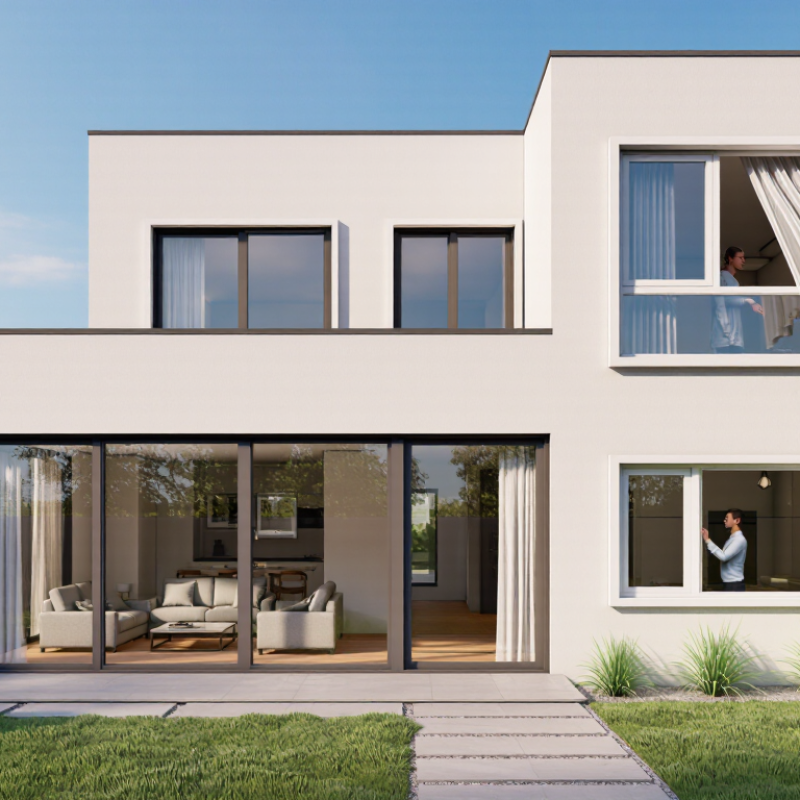
Define Your Home’s Climate, Style, and Window Requirements
Start by reading your home’s climate, not a window brochure. Notice which rooms feel drafty in January and which bake in afternoon sun. Check local seasonal temperatures, wind exposure, rainfall, and nearby traffic noise. A coastal home may need corrosion-resistant hardware, while a shaded room may benefit more from daylight than solar control. Small details matter.
Tip: Photograph each window at morning and late afternoon. Note condensation, glare, and outside noise. Ask an installer how glazing and frame choices respond to your conditions.
Then consider how the windows should look and work. Match frame proportions to the house’s architecture, but do not assume every opening needs the same design. A large picture window can suit a view; a tilt-and-turn or casement style may help with ventilation and cleaning. Measure carefully, and confirm whether nearby furniture, trees, or walkways limit how a sash can open.
List your practical requirements before comparing specifications: insulation, sound reduction, privacy, easy operation, or low maintenance. Compare whole-window performance, not just the glass rating, and ask how installation affects air leakage. A polished spec sheet can miss the feel of a cold corner or a stubborn latch. Keep those small frustrations on your checklist.
10 Tips for Choosing Premium Windows for Your Home - Define Your Home’s Climate, Style, and Window Requirements
| Tip | Selection Dimension | What to Assess | Practical Guidance |
|---|---|---|---|
| 1 | Local climate | Heating and cooling needs, seasonal temperatures, wind, rainfall, and sun exposure. | Identify whether reducing winter heat loss, limiting summer heat gain, or managing both is the priority. Use local energy guidance and the window’s certified performance ratings when comparing options. |
| 2 | U-factor | How readily heat passes through the complete window. U-factor includes the frame and glazing; lower values indicate better insulation. | Compare whole-window U-factors on certified product labels. In heating-dominated locations, a lower U-factor can help reduce heat loss; check local requirements before choosing. |
| 3 | Solar heat gain | The Solar Heat Gain Coefficient (SHGC), which measures how much solar radiation enters through the window. | A lower SHGC can help limit unwanted summer heat, while a higher SHGC may allow more passive solar warmth. Consider orientation, shading, and cooling needs rather than choosing by climate alone. |
| 4 | Glazing and coatings | Number of panes, low-emissivity (low-e) coatings, gas fill, and the window’s intended climate application. | Double glazing is commonly used to improve insulation compared with single glazing. Low-e coatings and insulating gas fills can further improve performance; compare certified whole-window ratings, not glass-only claims. |
| 5 | Frame material | Insulation, upkeep, moisture exposure, appearance, and compatibility with the home’s construction. | Vinyl and fiberglass frames generally require little routine painting; wood needs more attention to its finish, especially where exposed to moisture. Frame performance varies by design, so review the complete window rating. |
| 6 | Architectural style | Window shape, frame profile, grille pattern, color, and proportions in relation to the home. | Match new windows to the home’s architectural character and existing openings. For historic properties or regulated neighborhoods, check preservation guidelines and local approval requirements before ordering. |
| 7 | Operation and ventilation | How each window opens, how much ventilation is needed, and whether occupants can reach it safely. | Casement and awning windows open outward; sliding and hung windows move within the frame. Choose operation based on room use, airflow, furniture placement, cleaning access, and applicable egress rules. |
| 8 | Size and placement | Rough-opening dimensions, wall conditions, orientation, daylight, privacy, and nearby obstructions. | Have openings measured before ordering, including checks for square, level, and plumb conditions. Window size and placement affect daylight, views, privacy, and heat gain; avoid assuming that a standard size will fit. |
| 9 | Air and water performance | Certified air-leakage and water-resistance information, plus suitability for local exposure to wind and rain. | Review test data and local building-code requirements, particularly for exposed elevations and storm-prone areas. Correct installation, flashing, and sealing are essential to achieving the intended performance. |
| 10 | Installation and long-term value | Installer qualifications, installation details, warranty coverage, maintenance needs, and total project cost. | Request a written scope covering removal, flashing, insulation, sealing, disposal, and finishing. Review warranty terms and maintenance instructions, and compare total installed cost alongside energy performance and durability. |
Related Posts
-
2026 Best Manufactured Windows for Global Buyers
-

2026 Best Manufactured Windows for Global Buyers?
-
What Are China Top 10 Window Suppliers to Order From?
-

What Are the Best Ready Made Windows in 2026?
-

2026 Best Premium Windows for Global Buyers?
-
Why Choose Okna Windows for Your Home Improvement Needs?